Ultimate Guide To The Best British Christmas Drinks
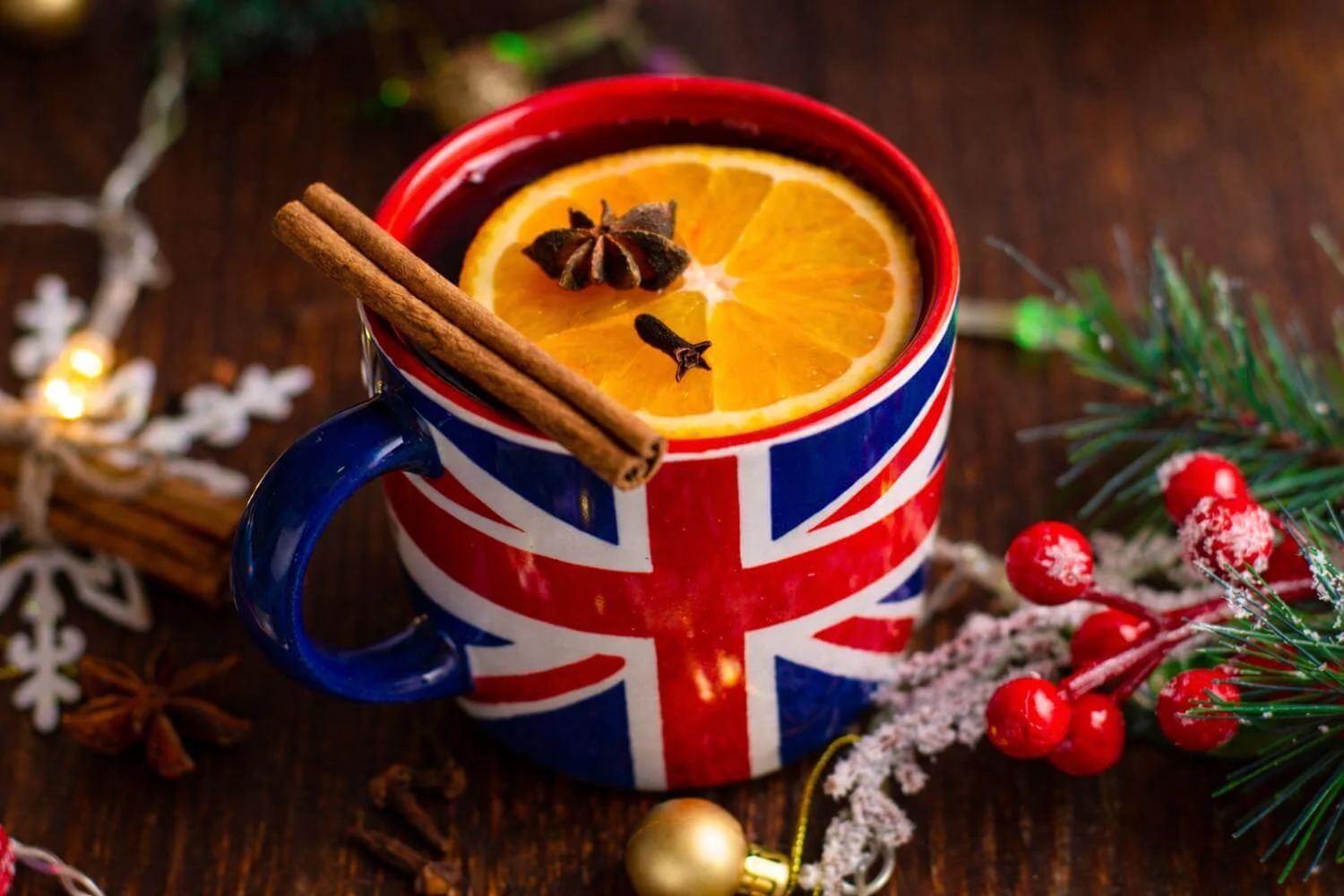
British Christmas drinks are all about warmth, comfort, and a little bit of festive nostalgia. They’re the drinks for cold evenings, quiet nights indoors, Christmas markets and social gatherings. Food and drink are such a strong part of Christmas back in England, and British festive drinks are no exception. From spiced wines to cosy mugs of something hot and comforting, these drinks are all simple to create at home and designed to be enjoyed slowly.
This post is for anyone curious about British Christmas drinks, especially if you’re based in Canada or the US and want to try something a little different this year. Whether you’re looking to recreate a traditional British Christmas at home or just add one or two festive drinks to your celebrations, I’ll walk you through the classics that Brits genuinely love. These traditional British Christmas drinks are enjoyed both in the UK and by British expats celebrating Christmas abroad. Let’s get cosy and dive into the festive drinks that make Christmas in the UK feel like home.
The Classic Mulled Wine
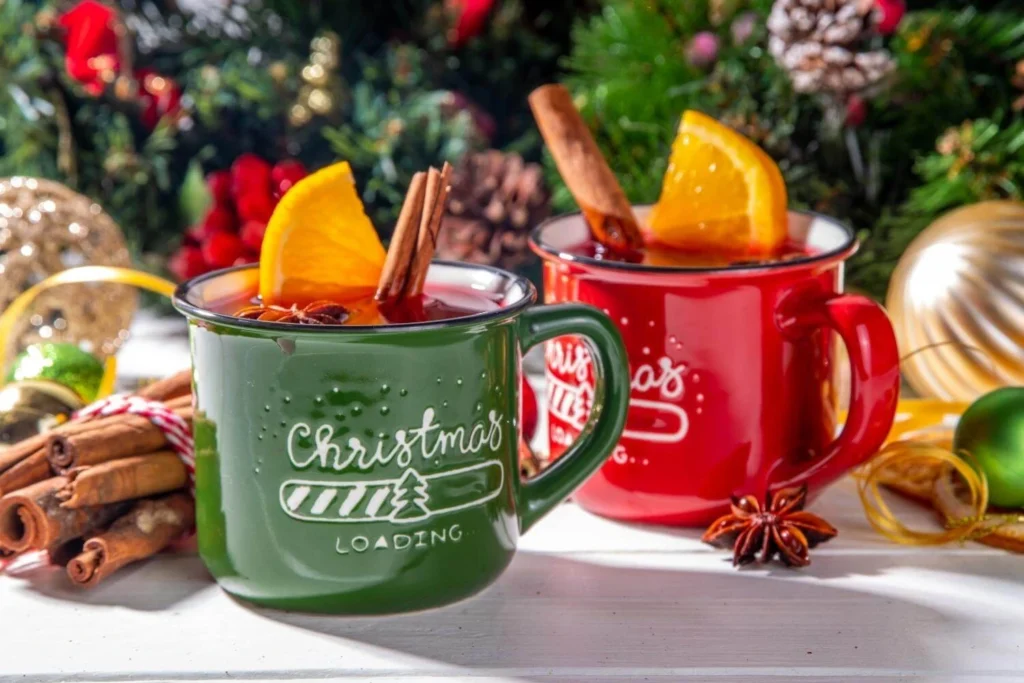
Mulled wine is an iconic British Christmas drink that is generally a non-negotiable part of the festive season. The smell of warm spices like cinnamon and cloves, citrus, and red wine gently simmering on the stove instantly makes a house feel cosy, festive, and welcoming. Traditional mulled wine is everywhere in the run-up to Christmas, and it’s one of the most recognisable British Christmas market drinks. It’s also served at winter fairs, festive events, and casual get-togethers with friends.
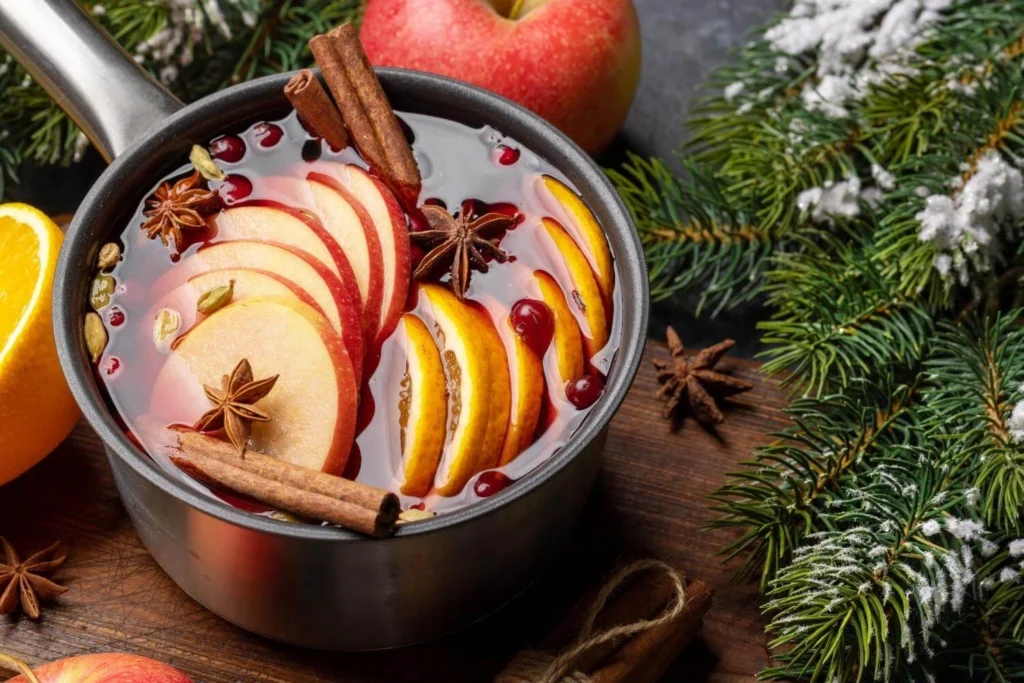
How To Make Simple British Mulled Wine At Home
You don’t need anything fancy to make a good mulled wine. This is a very forgiving drink and easy to adjust to taste.
British Mulled Wine Ingredients:
- 1 bottle of red wine (something fruity works best)
- 1 orange, sliced
- 8–10 cloves
- 2 cinnamon sticks
- Sugar to taste
Add everything to a saucepan and gently heat over low to medium heat for about 15 to 20 minutes. Don’t let it boil. Once it’s fragrant and hot, strain into mugs and serve with a cinnamon stick or slice of orange.
Some people add a splash of brandy or port for extra warmth, while others just keep it simple. The key rule is never to boil it. Mulled wine should be warmed slowly so the flavours infuse without cooking off the alcohol.
What Wine Works Best
Cheaper, fruit-forward red wines usually work better for mulled wine than anything too dry or tannic. In the UK, Brits often use inexpensive supermarket wine without overthinking it. If you can find English red wine and want to lean into the experience, it does work beautifully, but it’s not essential. Any fruity red wine will work. Mulled wine is about comfort, not perfection.
Mulled Cider
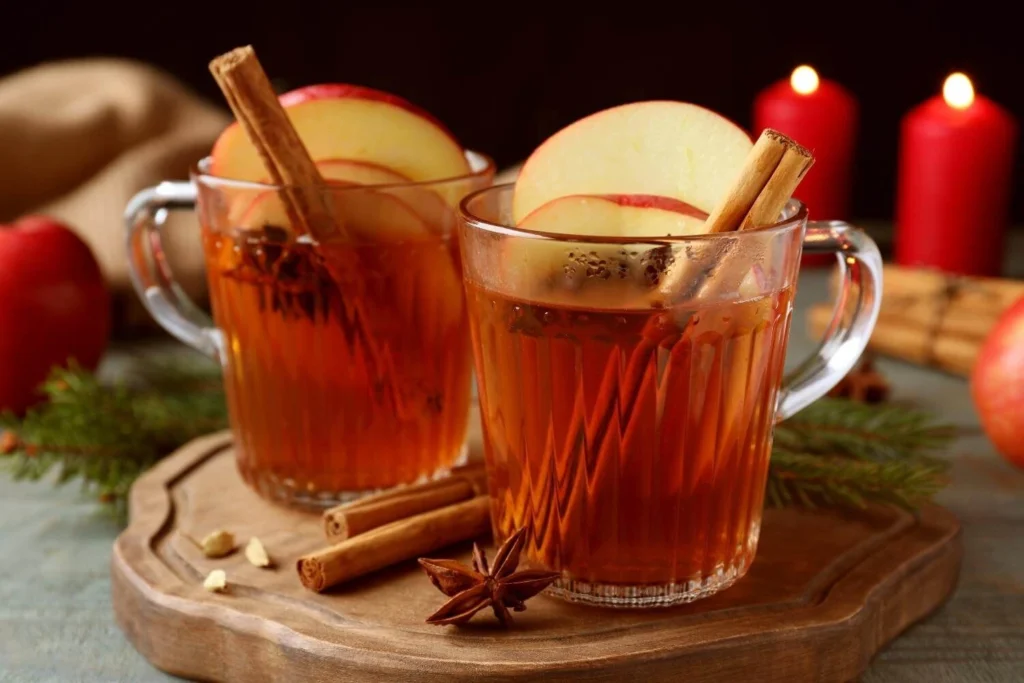
Mulled cider is the popular alternative to mulled wine in Britain, especially at Christmas markets, winter festivals, and outdoor seasonal events. It’s particularly common in areas of the UK that have strong cider-making traditions, such as the West Country, where apple cider has long been part of local culture.
Cider has deep roots in British drinking culture, particularly in England. For Brits who prefer something lighter than mulled wine, mulled cider offers a warming, gently spiced alternative.
How To Make Simple British Mulled Cider
Mulled cider is made by gently heating apple cider with spices and citrus. Compared to mulled wine, it’s usually slightly sweeter and more aromatic, with the apple flavour taking centre stage.
Common ingredients included in British mulled cider:
- Apple cider
- Cinnamon sticks
- Cloves
- Star anise
- Orange or lemon peel
Some versions also include a splash of brandy, rum, or Calvados, although alcohol isn’t essential.
Snowball Cocktails
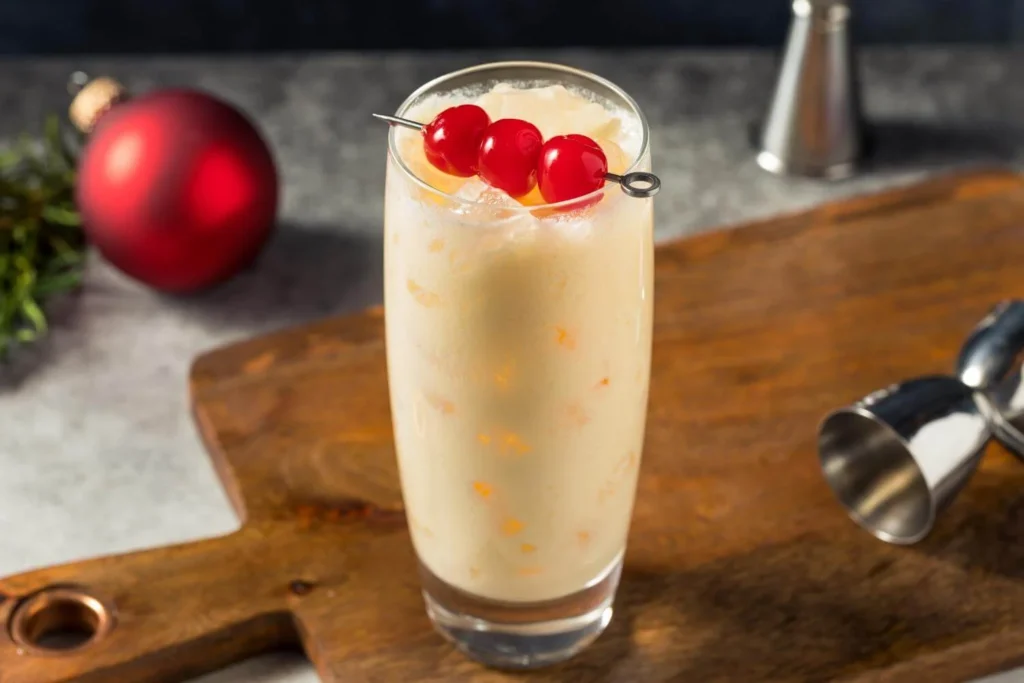
Snowball cocktails are one of the most recognisably British Christmas drinks, especially for anyone who grew up in the UK in the 1970s, 80s, and 90s. Often described as a retro British Christmas cocktail they’re nostalgic, slightly retro, and strongly associated with festive parties, family gatherings, and Christmas TV adverts. It’s light, sweet, and fizzy, making it easy to sip over a long evening of socialising rather than something designed to pack a strong punch.
In Britain, Snowballs are very much a seasonal drink that instantly signals “it’s Christmas now”. You’re unlikely to see them ordered in pubs year-round, but in December they suddenly reappear everywhere, from home cocktail trays to supermarket shelves.
What Is a Snowball Cocktail?
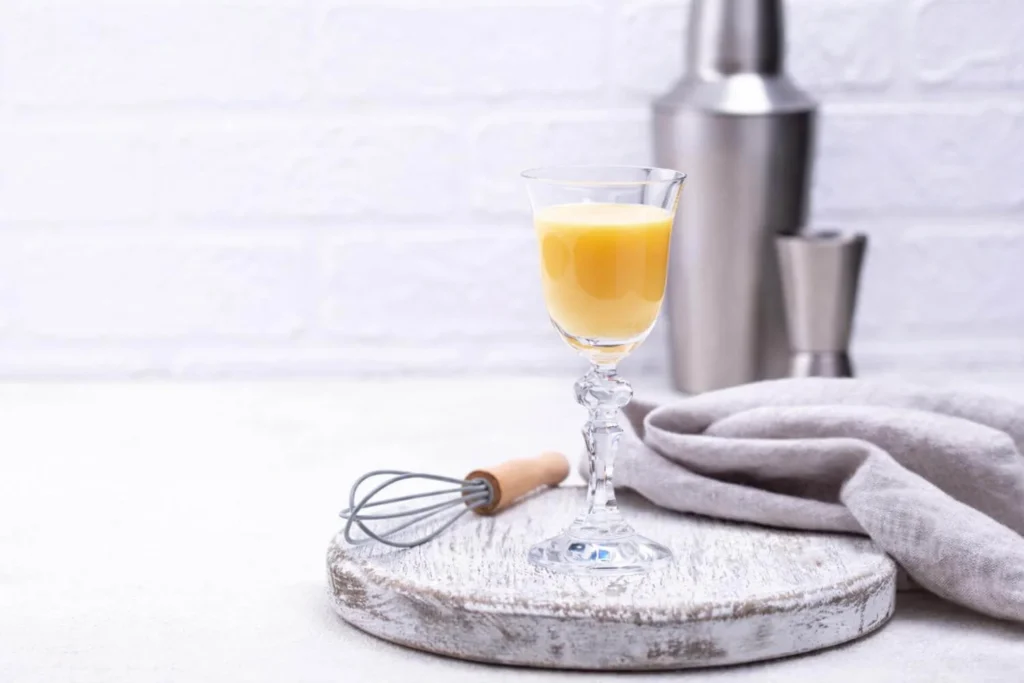
A traditional Snowball is made with advocaat, lemonade, and sometimes a squeeze of fresh lime juice. Advocaat is a thick, yellow Dutch liqueur made from eggs, sugar, and brandy, and it’s a key part of what gives the Snowball its unmistakable festive character. It’s a creamy but refreshing cocktail that feels indulgent without being heavy.
In the UK, advocaat is almost exclusively associated with Christmas, with many people only ever buying it in December to make Snowballs. It’s usually served in a tall glasses with ice and plenty of lemonade. They’re often garnished simply, if at all, but festive additions like a maraschino cherry or a slice of lime are common.
How To Make A Classic Snowball Cocktail
A traditional British Snowball is quick to make and doesn’t need any fancy equipment.
Snowball Cocktail Ingredients:
- 50 ml advocaat
- 150 to 200 ml lemonade (UK-style fizzy lemonade, not American lemonade)
- Fresh lime wedge, optional
- Ice
- Garnish, optional: lime slice or a maraschino cherry
Fill a glass with ice and pour in the advocaat. Top it up with lemonade and give it a gentle stir. If you like, squeeze in a wedge of lime to cut through the sweetness. Garnish with a lime slice or a cherry and serve immediately.
Quick Tip:
- Start with less lemonade, taste it, then top up. Snowballs are meant to be light and fizzy, but you can make them creamier or fresher depending on how much lemonade and lime you use.

A Toast With Sparkling Wine
Sparkling wine plays a central role in British Christmas celebrations. It’s the drink most associated with toasts, festive lunches, Christmas Day gatherings, and ringing in the holiday season with a sense of occasion.
In British culture, sparkling wine is often the centrepiece of Christmas Day drinks in the UK. Whether it’s Christmas morning with breakfast, a family gathering, or a quiet toast at home, it’s poured throughout the day. Even households that don’t drink much alcohol often make an exception for a bottle of bubbles at Christmas.
British Sparkling Wine Traditions
Historically, Champagne was the default festive sparkling wine in Britain, and it’s still seen as the most traditional option. Over the last couple of decades, English sparkling wine has become increasingly popular, especially for Christmas celebrations, thanks to its quality and dry, crisp style.
British sparkling wines tend to be fresh, citrus-forward, and well-balanced, making them easy to drink alongside food rather than overwhelming it. British sparkling wines tend to be fresh, citrus-forward, and well-balanced, making them easy to drink alongside food rather than overwhelming it. Served chilled in flutes or coupe glasses, it pairs particularly well with appetisers, smoked salmon, cheese boards, and lighter festive dishes.”

Champagne and Blackcurrant
Champagne and Blackcurrant is a classic British celebratory drink, particularly associated with Christmas, weddings, and special occasions. It’s simple, elegant, and quietly festive, and many people in the UK will recognise it even if they don’t drink it often.
The drink is traditionally made by adding a small splash of blackcurrant cordial to Champagne or sparkling wine. It’s similar in spirit to a Kir Royale, but in Britain it’s usually made with cordial rather than crème de cassis. It’s uncomplicated, familiar, and feels quietly luxurious — exactly the kind of drink that fits naturally into a British Christmas.
Why Champagne and Blackcurrant Is So Popular in the UK
Blackcurrant is a very familiar flavour in Britain and far more common than in North America. Blackcurrant cordial has been a household staple for generations, which makes this drink really accessible as well as celebratory. Adding blackcurrant softens the sharpness of Champagne slightly and gives the drink a subtle fruity sweetness, making it easy to enjoy even for people who don’t normally love very dry sparkling wine. This drink is most often served for festive toasts.
How To Make Champagne And Blackcurrant
Ingredients:
- Champagne or sparkling wine
- Blackcurrant cordial
Pour chilled Champagne or sparkling wine into a flute. Add a splash of blackcurrant cordial to make the drink look pale pink rather than turning dark purple, and give it a gentle stir. Serve immediately.
Bucks Fizz
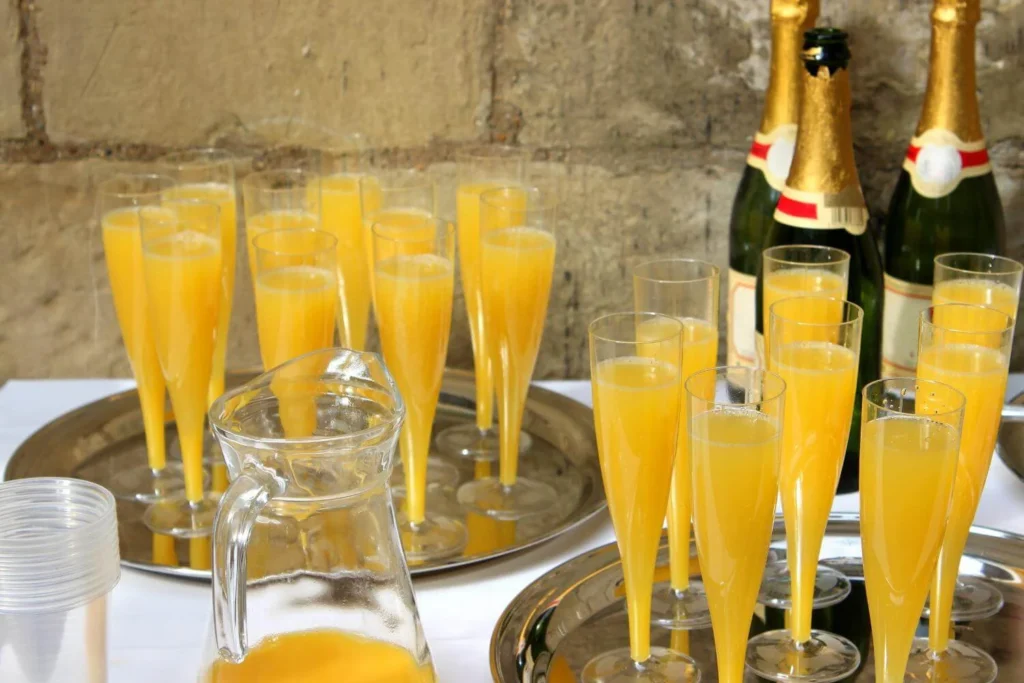
Bucks Fizz is a simple sparkling cocktail made with Champagne or sparkling wine and orange juice. In Britain, it’s strongly associated with Christmas morning rather than evening celebrations. In Canada and America, it’s called a Mimosa.
It’s typically served while opening presents or before Christmas lunch and is considered a light, festive drink that feels celebratory without being too heavy early in the day.
Hot Toddy
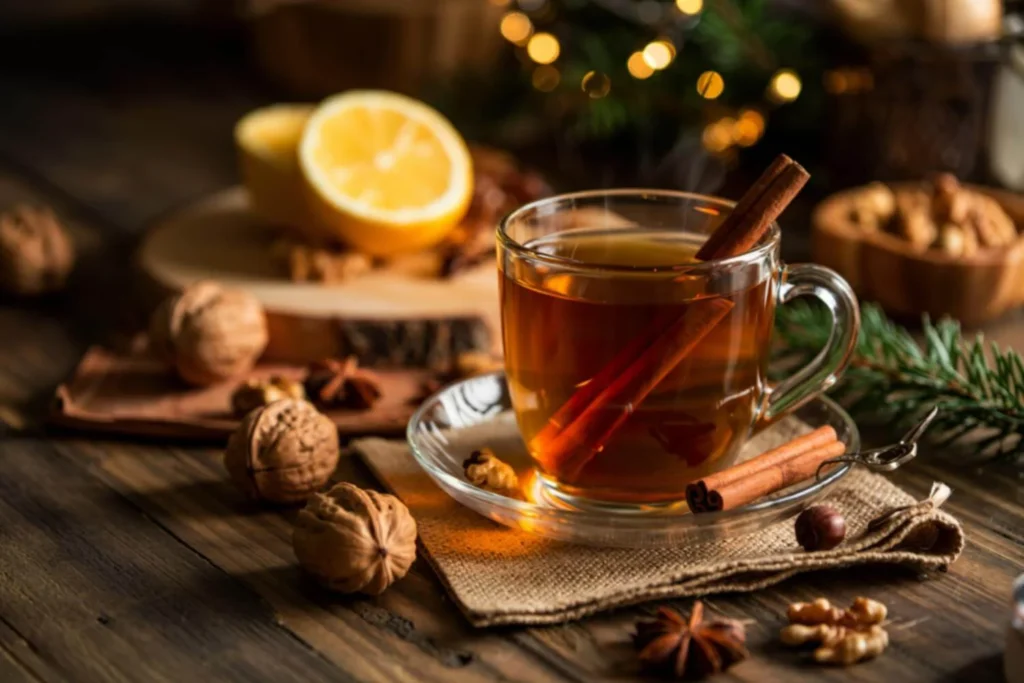
The traditional British hot toddy is one of the most comforting British winter drinks for cold, grey days. While it’s enjoyed in other countries too, it has a strong place in British winter culture, especially at Christmas time. It’s also a popular drink to enjoy when suffering with a cold or the flu.
Hot Toddies are associated with the belief that they can fix just about anything, from a cold to a miserable winter mood. It’s a simple, soothing, unfussy drink, which is exactly why it works so well. For me, it’s a go-to on very cold winter nights or when I’ve got the flu.
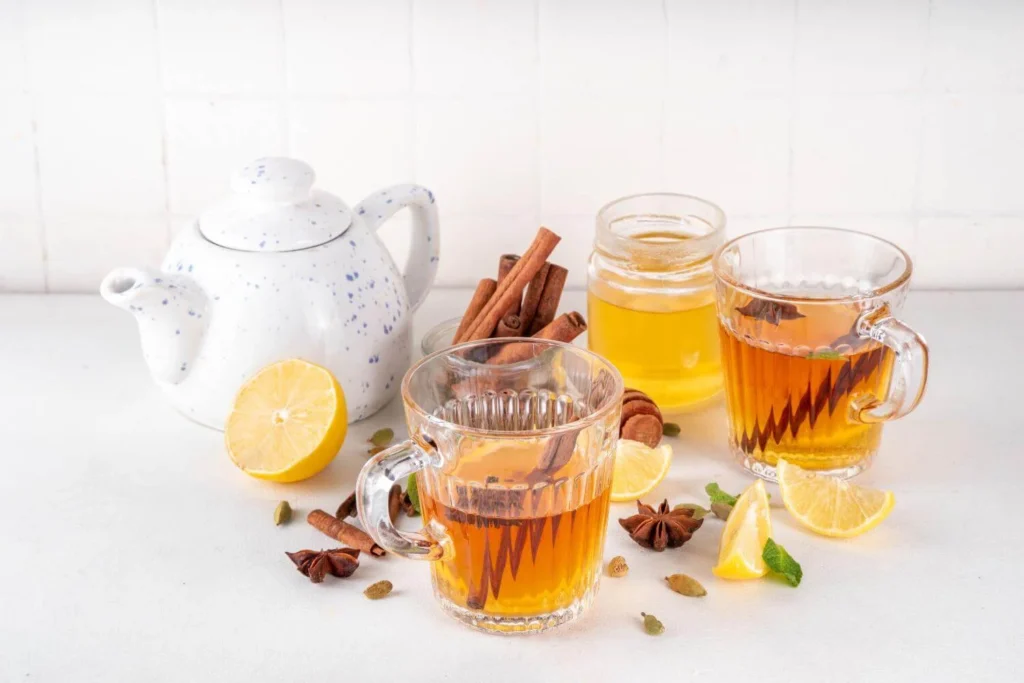
A traditional British Hot Toddy is made with whisky, honey, lemon, and hot water. The whisky provides warmth, the honey softens the drink and adds sweetness, and the lemon keeps it from feeling too heavy. It’s gently warming rather than overly strong, making it perfect for slow sipping.
How To Make A Classic British Hot Toddy
This is a very forgiving drink and very easy to adjust depending on how strong or sweet you like it.
Ingredients:
- 2 oz whisky
- 1 tablespoon honey
- 2 to 3 slices of lemon
- Hot water
Add the whisky and honey to a mug and stir until the honey dissolves. Add the lemon slices, then top with hot water. Give it a gentle stir and taste, adjusting the honey or lemon if needed.
Easy Variations To Try
Many people tweak their Hot Toddies depending on preference. Some add a cinnamon stick or a few cloves for extra warmth. Others swap honey for maple syrup or use different types of whisky for slightly different flavour profiles. There’s no strict rule, which is part of the charm.

Port
Port is a sweet, fortified wine made by adding brandy during fermentation, which stops the process early and leaves the wine richer and higher in alcohol. Although it originates in Portugal, it has been associated with British drinking culture for a long time.
In the UK, over Christmas, port is most commonly served after dinner in small glasses. It’s traditionally paired with cheese, especially Stilton, and is usually enjoyed slowly during the evening rather than as a celebratory toast. The first time I ever tried port was after a Christmas dinner.

Sherry
Sherry is a fortified wine from Spain that ranges from dry to sweet, depending on the style. In Britain, sweeter styles of sherry are most closely associated with Christmas.
Sherry is often served earlier in the day than port, either before Christmas dinner or alongside savoury snacks. It’s typically served chilled or lightly cool in small glasses and is seen as a gentle, social drink rather than a party cocktail.
Toffee Apple Cider
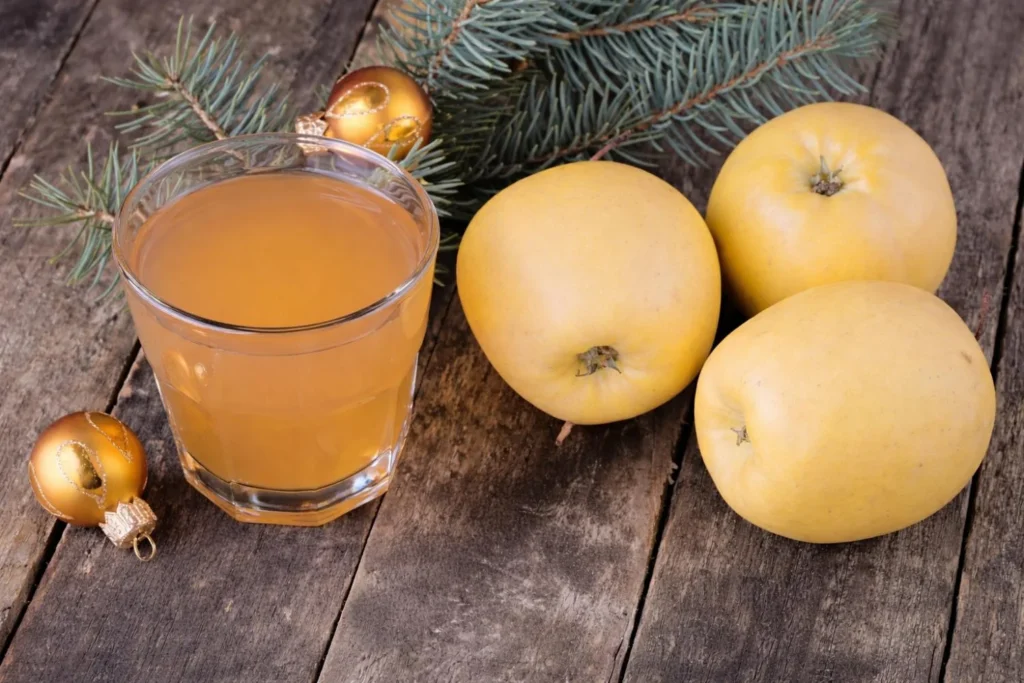
Toffee apple flavours are strongly associated with British autumn and early winter, especially at fairgrounds, bonfire night, and seasonal markets. While toffee apple cider isn’t a long-standing traditional Christmas drink in the same way as mulled wine or Snowballs are, it has become popular as a festive, indulgent winter drink that’s a fun alternative to mulled wine or mulled cider.
Toffee apples are a classic British treat, traditionally sold at fairs and outdoor events. The combination of sharp apple and rich toffee is instantly recognisable and nostalgic for many people in the UK. When paired with cider, those flavours translate into a delicious hot drink that feels cosy and seasonal.
How To Make Toffee Apple Cider at Home
Ingredients:
- Apple cider
- Toffee sauce or caramel sauce
Gently heat the apple cider slowly in a saucepan until it’s warm but not boiling. Stir in a spoonful of toffee or caramel sauce until it’s fully dissolved. Pour into a mug and serve warm.
Choosing the Right Cider
A dry or medium-dry apple cider works best, as it balances the sweetness of the toffee. Very sweet cider can make the drink cloying once the sauce is added.
In Britain, traditional cloudy apple ciders are often preferred for this kind of drink because they have more depth and apple character.

Wassail (Spiced Apple Cider)
Wassail is one of the oldest British festive drinks, with roots that stretch back to medieval England. Unlike some modern Christmas beverages, wassail is tied to ritual and community as much as flavour. It’s a warm apple cider, traditionally enriched with spices and often fortified with brandy or rum. It’s richer and more complex than plain hot apple cider or mulled cider and intended to be sipped slowly.
Historically, wassailing was part of apple orchard ceremonies, where British people would gather in winter to drink spiced cider, sing, and toast the health of the trees to ensure a good harvest in the year ahead. Over time, the drink itself has become associated more broadly with winter celebrations and Christmas.
Drinking wassail connects modern celebrations to centuries-old British traditions, making it one of the most meaningful festive drinks on this list, even if it’s less commonly made at home than mulled wine.
How Wassail Is Traditionally Made
Wassail recipes vary widely, but the core idea is gently heating cider with spices and fruit to create a deeply aromatic drink.
Common flavours in Wassail include:
- Apple cider
- Cinnamon
- Cloves
- Nutmeg
- Ginger
- Citrus fruits like oranges or lemons
It’s typically made in a large pot and served warm in mugs. Alcohol is optional, but historically brandy or rum was often added. The emphasis is on warmth, fragrance, and comfort rather than sweetness.
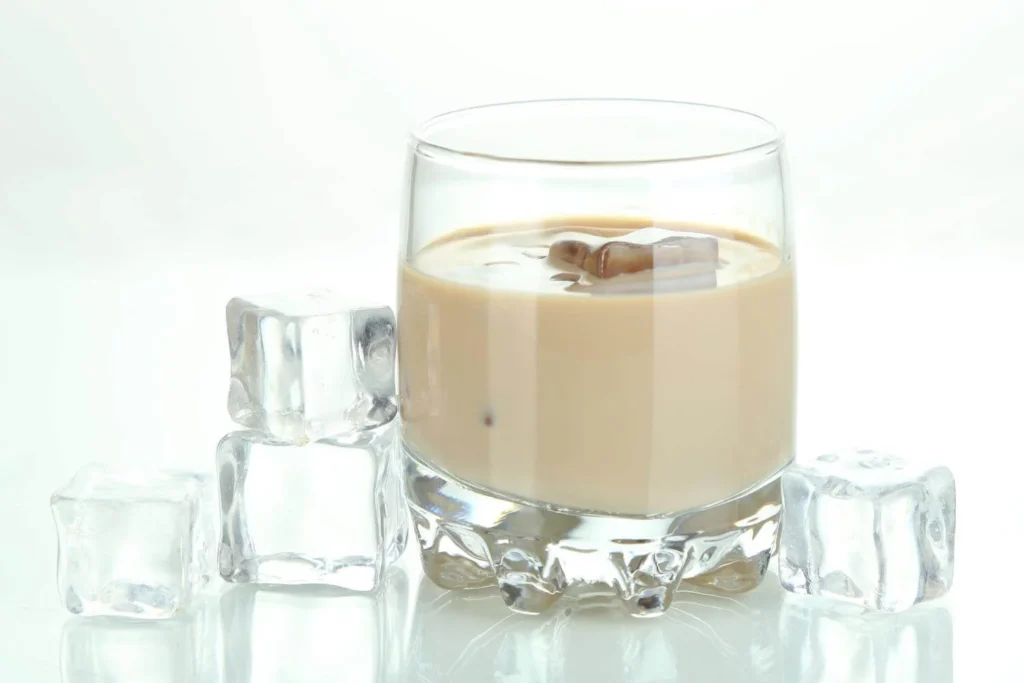
Baileys (and Cream Liqueurs)
Irish cream liqueurs, most famously Baileys, are a common fixture in British homes at Christmas. These creamy, sweet drinks are made from a blend of Irish whiskey, cream, sugar, and flavourings.
At Christmastime, it’s usually served in small glasses after dinner, poured over ice, or added to coffee or hot chocolate. It’s also pretty good on vanilla ice cream.
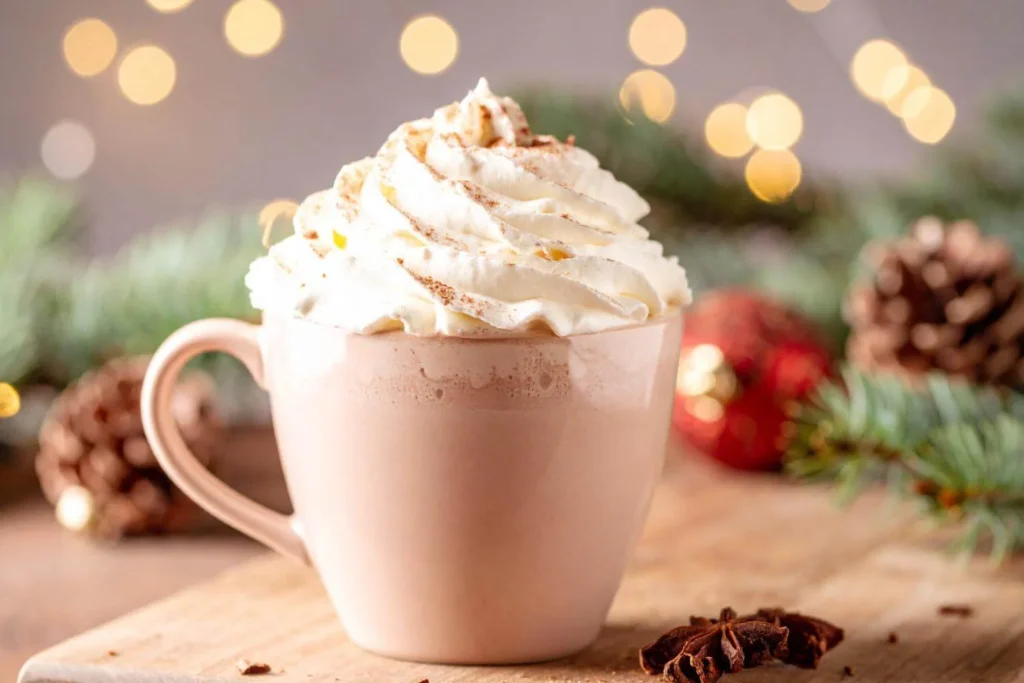
Boozy Hot Chocolate
Hot chocolate with added liqueur is a popular winter drink during the Christmas period, especially in the evenings. It’s often made with dark or milk chocolate and spiked with alcohol. Popular additions include Baileys, brandy, rum, or orange liqueur. The result is a rich, warming drink that’s typically enjoyed at home rather than at large gatherings.
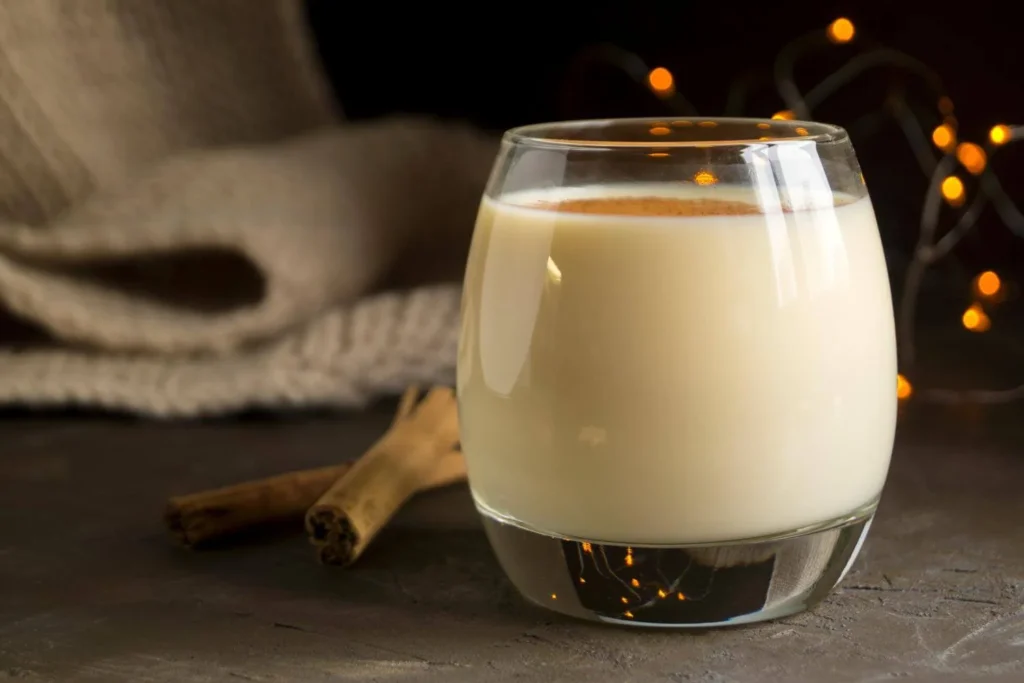
British-Style Eggnog
Although eggnog is a North American Christmas staple, it’s also part of British Christmas traditions. Indulgent without being too heavy, British-style eggnog is rich and creamy but not overly thick. Unlike North American eggnog, it leans more heavily on warming spices and spirits rather than sugar, so it’s less sweet. Eggnog in the UK is also often made at home rather than bought pre-made.
The biggest difference between British and North American eggnog is the alcohol. In Britain, brandy is the most traditional choice, rather than rum or bourbon. Nutmeg is also essential and tends to be used generously, which gives the drink its unmistakable Christmas flavour.
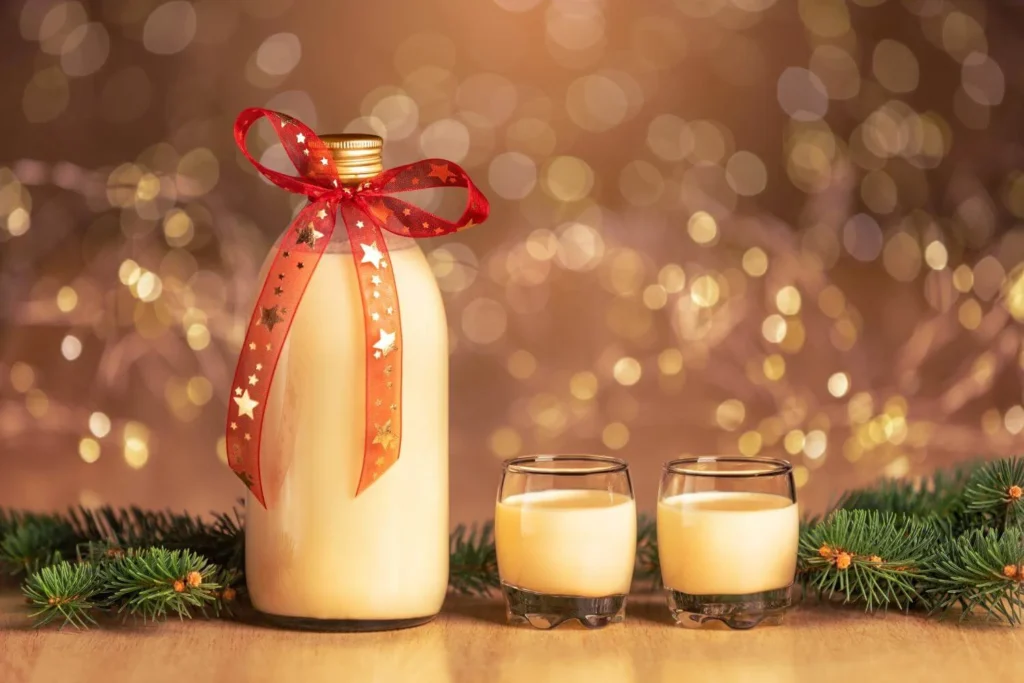
How To Make British-Style Eggnog at Home
Homemade eggnog is much simpler than it sounds and tastes far better than anything bottled.
Ingredients:
- 4 large eggs
- 1/2 cup sugar
- 1 cup whole milk
- 1/2 cup brandy
- Freshly grated nutmeg
Whisk the eggs and sugar together until pale and slightly thickened. Slowly add the milk and brandy while whisking to keep everything smooth. Chill before serving, then finish with a generous grating of nutmeg on top.
Eggnog can be served chilled or lightly warmed, depending on preference, though chilled is more traditional in the UK.
Easy Ways To Adjust The Flavour
Eggnog is very easy to customise. Some Brits add a splash of cream to make it richer, while others only use milk to keep it lighter. You can also adjust the sweetness or alcohol level depending on taste. A pinch of cinnamon or vanilla adds extra festive flavour without being overpowering.

British Christmas drinks are all about warmth, nostalgia, and enjoying the season in comforting rather than complicated ways. From mugs of mulled wine and hot toddies to retro Snowballs and celebratory glasses of Champagne and blackcurrant, each drink plays its own role in British Christmas traditions.
Some of these drinks have centuries of history behind them, while others are tied more closely to modern Christmases and my own personal memories. Together, they reflect how Christmas is celebrated in Britain, slowly, socially, and with plenty of pauses for something warm, boozy or sparkling.
If you’re celebrating Christmas in Canada or the US this year, many of these drinks are really easy to recreate at home, even if you’ve never tried them before. Whether you make one festive drink or work your way through the list, I hope this post helps you bring a little bit of British Christmas charm into your own celebrations. If you do try any of these drinks, I’d love to hear which ones become your favourites.
If this post has you craving a proper British Christmas, you might also enjoy exploring traditional British Christmas food and how to recreate a British-style Christmas at home, wherever you’re celebrating.
Share Me
If you found this post helpful, share it or pin it! It’s one of the best ways to show your support. Thank you!

Gemma Lawrence is a British expat, solo female travel blogger, and the creator of This Brit’s Life — a travel and lifestyle blog that helps women explore the world confidently, live abroad independently, and stay informed about global issues.
Born and raised in England, Gemma has been living in British Columbia, Canada since 2016 and has been traveling solo for over a decade. With a background in journalism and over ten years of experience in digital marketing and communications — including leadership roles with the International Association of Business Communicators (IABC/BC) — she brings both storytelling and strategy to her writing.
Through her posts, Gemma shares practical solo travel advice, expat insights, and confidence-building resources, while also covering broader topics like women’s rights, democracy, and self-care. Her goal is to inspire independence, awareness, and personal growth — one adventure at a time