How To Protest Safely: A Complete Guide To Protesting In Person And Online
Protesting can feel intimidating, especially if you’ve never done it before or if recent events have made public demonstrations riskier, louder, or more polarized than they used to be. Many people care deeply about what’s happening in America, and the world as a whole, but feel unsure about how to show up safely, effectively, or in a way that actually makes a difference. Other people want to get involved, but don’t know how or where to find protests, how to support movements responsibly, or whether their voice really matters at all.
Protesting isn’t just about showing up on the streets. It includes preparation, community care, digital action, and long-term support for grassroots movements that are doing the work every day. Whether you’re attending your first in-person protest, looking for safer ways to get involved, or supporting causes from home, there are many ways to participate meaningfully. The key is to remember that every voice matters, and every small action can build into effective resistance, especially when it seems like the bad guys will always win.
Protest doesn’t have to look one specific way, and it doesn’t require perfection. You don’t need to be an expert, fearless, or endlessly available. What matters is being informed, intentional, and respectful, of yourself, of others, and of the communities most affected. When done thoughtfully, protesting is one of the most powerful tools ordinary people have to push back against injustice, protect rights, and demand accountability.
This post is for those of us who believe in civic engagement but want practical, realistic guidance rather than slogans or activist jargon. It’s a practical protest survival guide, covering how to prepare before a protest, what to expect during one, how to look after yourself afterward, how to find legitimate protests, how to protest effectively online, and how to support grassroots organizations beyond a single moment. It’s about helping you show up in a way that feels sustainable, as safe as possible, and genuinely impactful, whatever that looks like for you.
Why Protests Matter (Even When Change Feels Slow)
Effective, enduring, resistance builds over time. Throughout history, change has never come from just one event. Big protests, boycotts, and famous revolutions were all culminations of events that happened in the run up. Like a kettle slowly boiling.
Protests have been a key feature of many effective resistance movements because they make power visible and pressure public. They force issues into the open when governments, powerful people and institutions want to handle them quietly, slowly, or oftentimes not at all. Authoritarian regimes always have an agenda, and resistance work such as protests disrupt, tamper with or downright slow down those agendas. It’s a way to put sand in the wheels. While a single protest rarely delivers immediate policy changes or gets rid of dictators, history shows us that sustained protest shifts narratives, priorities, and the cost of inaction.
But protest is not just about people getting out in the streets. Zooming out, it’s actually about creating powerful moments that can’t be ignored, that demand a response, and that signal to people in power that an issue has not gone away. Recent boycotts and coordinated pressure campaigns are a clear reminder of how sustained collective action can force powerful institutions to respond. One voice can be dismissed, but when it’s hundreds, thousands or hundreds of thousands of voices doing the same things and saying the same things, the impact can be huge. That’s why every voice and every action matters so much; it easily compounds.

Protests Work Cumulatively
One of the biggest misconceptions about protesting is that if change doesn’t happen right away, the protest “failed.” In reality, protests work cumulatively. They help shape public opinion, influence media coverage, energise organisers, bring people together, and create the conditions where legal, political, and cultural change becomes possible. Many of the rights people now take for granted, especially for women and people of color, were not won quickly or easily, they were won through repeated, often uncomfortable public pressure. We’ve had to fight white supremacists and religious extremists just like the Trump and Republican party regime for generations all over the world to get many basic human and civil rights.
Protests also serve as a form of collective documentation. They show future decision-makers, historians, journalists, and courts that people resisted, objected, and refused to consent silently. Even when governments ignore protesters in the moment, that record still matters.
So for those of you who feel utterly powerless or just disconnected from politics because it’s constant bad news, protest is often the most accessible form of civic participation. You don’t need wealth, connections, or institutional access to stand in public and say “this is not acceptable”. That visibility, especially when it’s widespread and sustained, changes what is politically survivable for those in charge.
Protests matter internally too. They create connections, build community, solidarity, and shared language. They help people to realise they are not alone in their concerns. For many movements, protests are where future organisers, volunteers, and leaders first find each other. That network-building is often just as important as the protest itself.
Protest Is Not A Moral Obligation Or The Only Way To Fight Effectively
At the same time, people participate in different ways at different times, depending on safety, health, capacity, and life circumstances. Some show up physically. Others support financially, digitally, or logistically. Movements need all of these roles to survive and be successful.
Ultimately, protest matters because silence is often interpreted as acceptance. When people show up, visibly, repeatedly, and with intention, it disrupts that assumption. It reminds those in power that consent is not guaranteed, and that public attention can always return. Change is rarely dramatic in the moment. But pressure accumulates. And protest is one of the ways that pressure is built.

How To Find Protests
Finding a protest isn’t usually the hard part, but sometimes finding a legitimate, well organised one is. In moments of political tension, misinformation spreads very quickly, and not every event being promoted online is what it claims to be. Taking a little time to verify before you show up protects both your safety and the integrity of the movement.
Start With Organisations, Not Viral Posts
The most reliable way to find protests is through organisations that already have a public track record. Grassroots groups, advocacy organisations, labour unions, community coalitions, and civil rights groups tend to promote actions they are organising or officially supporting. Things to look for:
- Established websites with clear missions and leadership
- Consistent social media histories, not brand-new accounts
- Clear information about location, timing, goals, and expectations
- Links to organisers, partner groups, or follow-up actions
If a protest has no identifiable organiser, no contact information, or only exists as a single graphic shared repeatedly, that’s a reason to pause, and investigate further.
Use Social Media Intentionally
Social platforms can be really useful tools for finding protests and resistance efforts.
Search by city or region alongside keywords like “march”, “rally”, “demonstration”, “protest”, “festival”, “music festival” and “wedding”. Then you can trace posts back to their original sources. Prioritise events that are shared directly by organizers, and large organizations. Where it’s screenshots or reposts with no context, look for more information. Be cautious of posts that:
- Encourage secrecy or last-minute location changes without explanation
- Frame escalation or confrontation as the goal
- Discourage people from asking questions
- Focus more on spectacle than purpose
If you’re attending alone, clarity matters even more. You should know where you’re going, why the protest exists, and what kind of action it is before you arrive.

Check Local And Community-Based Sources
Local knowledge is often more reliable than national feeds. Community centres, faith groups, student unions, libraries, neighbourhood organisations, and local advocacy groups often share protest information through newsletters or noticeboards. Local journalists and independent media outlets may also mention upcoming demonstrations tied to current events.
These sources tend to provide better context, including information like expected turnout, and accessibility, which helps you decide whether an event feels right for you.
Find Out What Kind Of Protest It Is
Not all protests are the same, and it’s important to know what you’re walking into. Some actions are marches. Others are stationary rallies. Some are designed to be family-friendly and accessible like No Kings, while others may involve civil disobedience or just pose a higher arrest risk. Legitimate organisers will usually state this clearly if it’s known.
If details are vague or intentionally obscured, be more cautious, especially if you are a first-time protester or attending protests alone. You are never obligated to participate in actions that feel unsafe or beyond your comfort level. It’s about finding activism efforts that work best for you.

Things To Try And Verify Before You Go
Before attending any protest, take some time to just do a quick cross-check of the information about the event.
- Is the event listed on the organizers official website or page?
- Are multiple trusted groups or creators sharing the same details?
- Is the location realistic and legal for the size of the event?
- Is there guidance on safety, accessibility, or conduct?
Trust your gut instincts. If something doesn’t add up or feels off, trust that instinct. Skipping one protest does not weaken a movement — showing up safely and sustainably strengthens it.
If You’re Planning To Attend Alone, Take Extra Steps
Going alone doesn’t mean going unprepared. Choose events with clear structure and visible organisers. Arrive early so you can orient yourself before crowds build. Let someone know where you’re going and when you expect to leave. Give yourself permission to leave early if the situation changes.
You are allowed to attend quietly, observe, hold a sign, or stand at the edge. Participation does not have to look performative to be valid.
When You Can’t Find A Protest Or Can’t Attend
There will be moments when no local protest exists, or when attending in person isn’t safe, accessible or possible for you due to work, health, safety, or timing constraints. That does not mean disengagement or that you are not doing your part. There are so many ways besides protesting that you can take action, and be part of the resistance.
Supporting organisers online, donating, contacting representatives, attending virtual actions, or amplifying verified calls to action are all meaningful forms of participation. Movements need people in many roles, not just those physically present.
Before The In-Person Protest: How To Prepare Safely And Intentionally
Preparing for a protest matters just as much as showing up. Whether you’re attending with others or going alone, what you do beforehand can make the difference between a calm, empowering experience and one that feels overwhelming or unsafe. Protests are protected forms of expression in many countries, but that protection has limits — and understanding those limits helps you make informed decisions rather than reactive ones.
This is not about fear-mongering. It’s about self-respect, situational awareness, and giving yourself options.
Learn What Your Rights Are
Before attending any protest, take time to understand your local laws around public assembly. In the U.S., resources from organizations like ACLU are a good starting point, but always remember that rights on paper don’t always translate cleanly in real-world situations.
Peaceful assembly is typically protected, but vague concepts like “public safety,” “disorder,” or “unlawful gathering” are often used to justify crowd control tactics or arrests. Many cities also have mass-gathering rules involving permits, insurance, or curfews. Even if these laws are rarely enforced, their existence can embolden overreach.
In general, public streets, sidewalks, and parks are more protected than private property. Blocking entrances, roads, or emergency services can quickly change the legal context of a protest, even if your intentions are peaceful.
If you’re protesting alone, knowing when you can leave — and that you are allowed to leave — is especially important. You do not owe anyone your presence once something no longer feels safe.

Make A Plan (Especially If You’re Attending Alone)
Never treat a protest as something you simply wander into without preparation.
If you’re going with others, decide in advance how you’ll stay connected and what you’ll do if you get separated. If you’re going alone, planning becomes even more important.
Tell someone you trust where you’re going, what the protest is about, and when you expect to be home. Share the location, timing, and any backup plans. Agree on a check-in time afterward.
Before you arrive, look at the area on a map. Identify exits, open spaces, and places you could step into if you need to regroup: Libraries, cafés, churches, or busy shops. If things escalate, having an exit in mind helps you move calmly instead of panicking.
If the protest has trained marshals, medics, or legal observers, take note of how they’re identified. These people exist to help, but if you’re alone, don’t rely on finding them in a moment of stress. Your goal is to remain mobile and aware.
Write down emergency contacts and a local legal hotline number and keep it somewhere accessible. Many experienced protesters write this information directly on their body so it can’t be lost. Don’t only have these numbers on your phone.
Minimise Your Digital Footprint
One of the most overlooked aspects of protest safety is data. The most important thing to remember is that the safest data is the data you don’t carry on you.
If you can attend without your primary phone, that is the lowest-risk option. If you need a device for navigation or safety, buy a cheap basic phone that you can use for resistance activities like attending protests and town hall’s. If you need to take your phone, keep it as stripped back as possible. Avoid bringing phones filled with personal photos, contacts, apps, especially work apps, banking details, or social media accounts, basically just delete anything you wouldn’t want accessed if your phone were taken.
Disable biometric unlocking like Face ID or fingerprint access on your phone. Switch to passcode instead. I’d recommend just having biometrics turned off all the time.
Turn off Bluetooth, Wi-Fi, and location services unless absolutely necessary.
Log out of all personal accounts.
Encrypted messaging apps can help, but assume you may still be recorded or observed. Be careful when filming faces of other protestors. Focus on ICE, Police officers, and any National Guard or military present. If you do record misconduct, store it securely and share it responsibly, not impulsively. Do not only store footage on your phone – save it in multiple places or use an app like X .
Surveillance is not just purely digital or fear mongering. Cameras, drones, license-plate readers, and phone tracking technologies are all now common at demonstrations. Planning with this reality in mind is just about caution and keeping yourself as safe as possible.
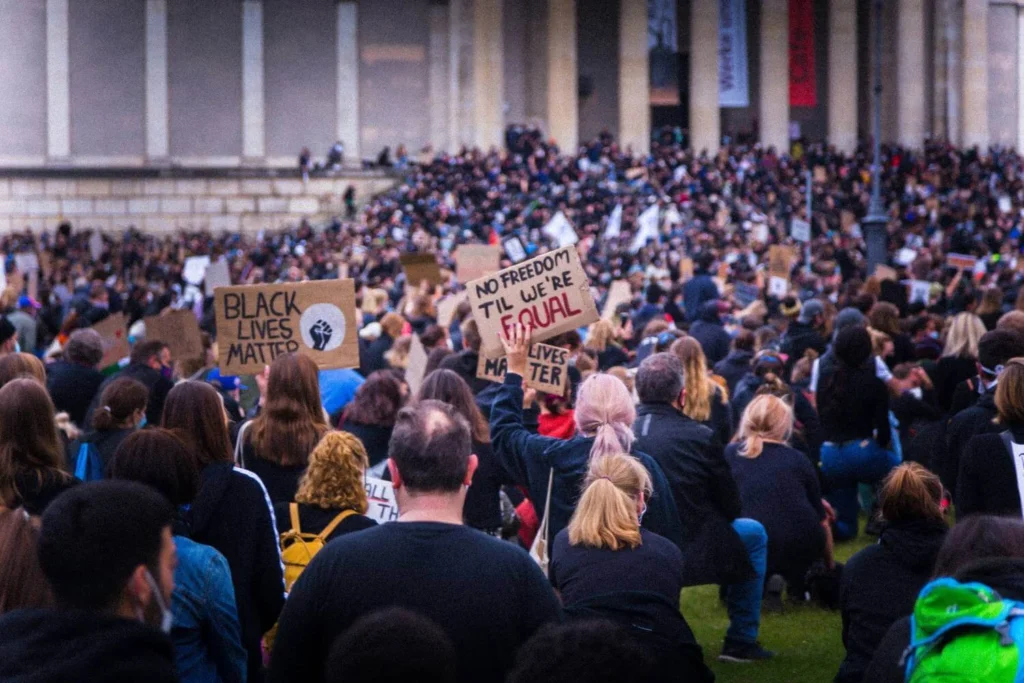
Dress To Avoid Identification, Not To Stand Out
Surveillance isn’t only digital. Clothing, accessories, and physical markers can make you easier to identify later.
Cover tattoos where possible, especially on hands, neck, or legs. Avoid distinctive jewellery, bold makeup, bright hair colours, or uniquely identifiable backpacks.
Choose neutral, comfortable clothing that blends into a crowd rather than draws attention. Avoid wearing clothing with slogans or logos that could be misinterpreted or used as an identifier later. Also, opt for loose-fitting layers to protect your skin and allow you to adjust to weather or conditions.
If you’re protesting alone, blending in gives you more freedom to leave quietly if needed without being singled out.
If you need to cover your face for safety reasons, do so consistently rather than only at tense moments.
Dress For Mobility And Basic Protection
Your clothing should allow you to walk, stand, and move comfortably for several hours.
Wear sturdy shoes with good support. Long sleeves and long trousers protect against sun, scrapes, and environmental irritants.
Extra Tip: Keep a clean set of clothes in your bag or car. If you get exposed to gas or spray it means you’ll be able to change quickly afterward rather than trapping residue against your skin.
Think About Arrival, Departure, And Transport
How you get in and out matters.
Park or arrive in well-lit, busy areas rather than quiet side streets. Avoid routes that funnel you into dead ends or narrow corridors. When leaving, choose visible, populated paths even if they take a little longer.
If you drove, take a quick look at your vehicle before leaving. If you’re using public transport, be aware that stations may be closed or monitored after large protests.
If you’re alone, leave early if things feel like they’re shifting. You do not need permission to prioritise your safety.
Be More Cautious With Sit-ins And Immobility Actions
Sit-ins and similar tactics should only be joined if they are organised, well-communicated, and led by trained marshals. These actions limit your ability to move and can increase the risk of arrest or injury.
If you’re attending alone or for the first time, it’s usually best to stay mobile. Knowing your exit options and maintaining the ability to leave calmly is one of your strongest safety tools.
Pack Intentionally, Not Excessively
Use a cross body bag or backpack. If you opt for a small backpack use one that has tons of compartments inc concealed compartments
You don’t need everything, just the essentials:
- Water and snacks that help regulate stress, such as salty or sugary foods.
- Mask, Balaclava or scarf to protect your face (water- or vinegar-soaked for gas)
- Googles for your eyes
- Whistle, personal safety alarm or another noisemaker
- Cash is useful just in case digital payments fail.
- Carry basic first-aid supplies just in case
- A small notebook and marker can be used to record badge numbers, times, or details if something happens.
- List of emergency contacts and legal numbers. Write important numbers on your body as backup.
A Grounding Reminder Before You Go
You are allowed to leave.
You are allowed to observe.
You are allowed to participate quietly.
You are allowed to protect yourself.
Important Reminder: Attending a protest alone does not make you reckless or selfish. It simply means you need to be even more intentional than if you were going in a group. Preparation is not about fear. It’s about dignity, autonomy, and making sure you can keep showing up in ways that are sustainable for you.
During The In-Person Protest
Stay Aware Of Your Surroundings
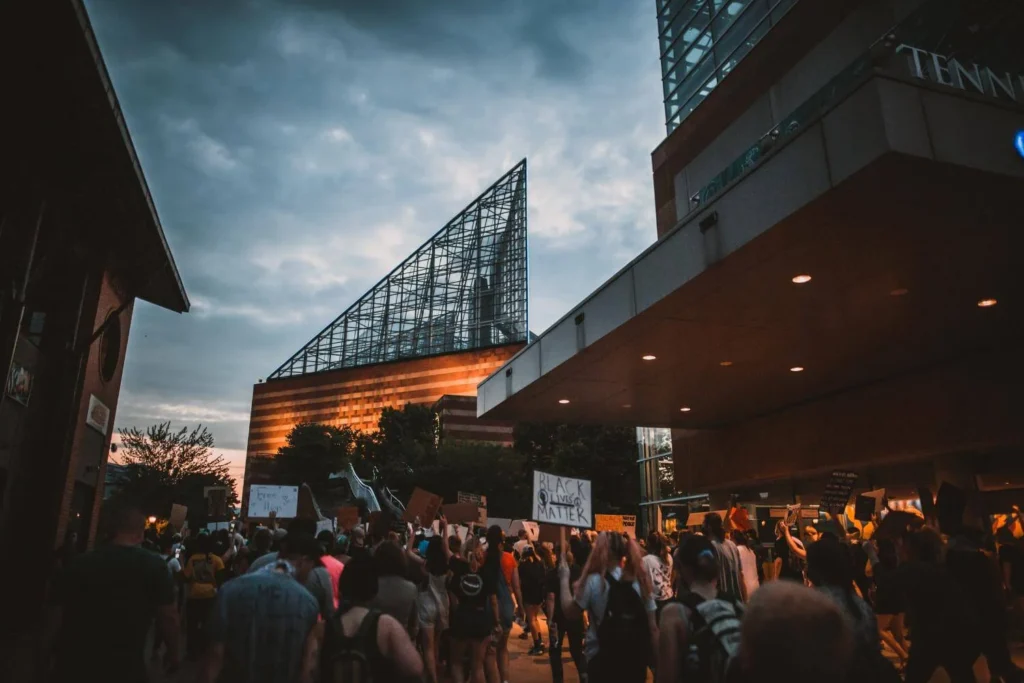
Keep your head up and regularly scan what’s happening around you. Pay attention to crowd density, exits, police positioning, and the presence of counter-protesters. Large changes, such as law enforcement putting on riot gear or suddenly moving into formation, are often early warning signs that conditions may shift.
If you’re protesting alone, staying toward the edges of the crowd gives you more flexibility. It’s easier to move, leave, or reposition without drawing attention. Avoid areas where people are tightly packed against barriers, walls, or narrow streets.
If the energy begins to feel tense, it’s okay to step away early. You don’t need to wait for something to “officially” go wrong before prioritising your safety.
Remain Peaceful And Avoid Engagement
Do not engage with people trying to provoke conflict — whether that’s counter-protesters, agitators, or overly aggressive individuals within the crowd. Shouting matches, insults, or confrontations often escalate situations unnecessarily and can draw unwanted attention.
If you choose to document what’s happening, do so carefully. Avoid filming faces, especially those of fellow protesters. Focus on actions rather than individuals, and do not argue or narrate emotionally while recording.
If approached by police, keep your responses brief and neutral. A simple question like, “Am I being detained, or am I free to go?” establishes clarity without escalating the interaction.
If you are detained, clearly state that you are invoking your right to remain silent and that you want a lawyer. Then stop speaking. Do not try to explain or justify yourself in the moment.

Things To Watch Out For During The Protest
Agitators And Escalation Tactics
Most protest movements attract a small number of people whose goal is disruption rather than change. These individuals often try to escalate situations by encouraging risky behaviour, introducing objects that could be used as weapons, or urging others to “push it further.”
Common warning signs include:
- Sudden calls for violence or property damage
- People urging confrontation while filming faces
- Individuals arriving late with heavy gear or masks unrelated to safety
- Pressure to act quickly or impulsively
If you notice this behaviour, do not engage. Do not argue, shove, or shout. Physical confrontation only benefits those seeking chaos and provides justification for mass arrests.
If possible, move away calmly. Staying mobile and unified is far more effective than reacting emotionally. If trained marshals or de-escalation teams are present, discreetly alert them.
If you document concerning behaviour, keep recordings private and share them only with legal observers or trusted organisations — not on social media.
If You’re Arrested Or Detained
If you are arrested, stay as calm as possible. Do not resist physically, even if the arrest feels unjust. Ask again whether you are free to go. If not, request a lawyer and stop speaking.
Do not consent to searches beyond what is legally required. Do not answer questions, make statements, or try to explain your intentions. Anything said in the moment can be misinterpreted or used against you later.
If you’re protesting alone, this is why having legal hotline numbers written down and shared with a trusted contact beforehand matters. Preparation is what protects you when stress is high.

After The Protest: Care, Documentation, And Follow-Through
What happens after a protest is just as important as what happens during it. Protests can be physically and emotionally draining, even when they remain peaceful.
Once you’re home or somewhere safe, prioritise basic care. Eat something nourishing, hydrate, and rest. If emotions are running high, talk it through with someone you trust. Processing the experience helps prevent burnout and anxiety.
If you experienced or witnessed misconduct, write down what you remember while it’s still fresh. Note dates, times, locations, badge numbers, and descriptions. Photograph any injuries and seek medical attention if needed.
Report abuses responsibly to civil rights organisations or legal groups rather than venting online. Public sharing should always be done carefully and without exposing identifiable faces or personal details.
Finally, remember that protest is not a one-off act. One march does not create change on its own — but it contributes to collective pressure, public visibility, and long-term accountability. Supporting grassroots organisations, staying informed, and continuing to engage in ways that are sustainable for you is how momentum is built.
You are allowed to rest.
You are allowed to step back.
You are allowed to keep showing up in ways that protect your wellbeing.

How To Protest Effectively Online
Not everyone can attend an in-person protest, and even for those who can, online activism is not secondary or lesser. Digital protest is one of the primary battlegrounds for public opinion, narrative control, and political momentum. But it only works when it’s done intentionally.
Online protesting is not about posting everything, reacting to every headline, or performing outrage for visibility. It’s about contributing to pressure, awareness, and accountability in ways that are sustainable over time.
Understand What Online Protest Can And Cannot Do
Online activism is powerful, but it has limits. A single post rarely changes policy. A viral moment does not equal lasting change. Where online protest excels is in amplification, education, coordination, and support.
It helps movements spread beyond geographic limits. It keeps issues visible between physical actions. It directs people toward resources, organisers, and real-world impact. Expecting it to instantly “fix” things leads to frustration and burnout. Treating it as one tool within a larger ecosystem makes it far more effective.
Be Selective, Not Reactive
One of the biggest mistakes people make online is trying to respond to everything. Algorithms reward outrage and speed, but movements are sustained by clarity and consistency.
You do not need to comment on every story, scandal, or provocation. In fact, reacting constantly often amplifies bad-faith actors and drains your energy. Choose a small number of issues you genuinely care about and focus your attention there.
- Does this post add clarity or context?
- Does it direct people to credible information or action?
- Does it support people who are already doing the work?
If the answer is no, it’s usually okay to scroll past.

Amplify People And Organisations Doing The Work
Effective online protest is less about your own voice and more about who you help be heard.
Follow and share from grassroots organisations, legal advocates, journalists, researchers, and organisers who have expertise and accountability. Quote them accurately. Link to their work. Credit them clearly.
Avoid resharing content that lacks sourcing or relies on shock alone. Virality without accuracy helps misinformation spread just as quickly as truth.
A good rule of thumb is to amplify up, not out — strengthen voices that already have credibility rather than reinventing the message yourself.
Use Your Platforms Strategically
You don’t need a large following to make an impact, but you do need intention.
Think about what your platform is actually good at. Long-form posts might be better for explaining complex ideas. Stories or short posts may be better for directing attention to urgent actions. Comments and replies can be powerful spaces for correcting misinformation calmly and clearly.
You are not obligated to turn your entire online presence into activism. Integrating it thoughtfully — rather than overwhelming your audience or yourself — is often more effective and sustainable.
Avoid Performative Activism Traps
Performative activism often looks loud but achieves very little. It centres visibility over impact and personal expression over collective outcomes. Things to look out for are:
- Posting for validation rather than change
- Resharing without reading or understanding
- Prioritising aesthetics over accuracy
- Attacking individuals instead of systems
- Treating activism as a personal brand
This doesn’t mean silence is better. It means slowing down, checking sources, and asking whether your actions help or hinder the cause.
Consistency over time matters far more than a single dramatic post.

Protect Your Energy And Mental Health
Online protest exposes you to a constant stream of distressing information. That takes a toll.
Mute accounts that exist only to provoke. Take breaks without guilt. Curate your feed intentionally rather than letting algorithms dictate what you see. Being informed does not require being constantly flooded.
Burned-out people don’t build movements. Sustainable engagement means knowing when to step back so you can keep showing up long-term.
Turn Online Engagement Into Real Support
The most effective online protest often happens quietly.
Signing petitions, donating when you can, contacting representatives, supporting independent journalism, attending teach-ins or webinars, and sharing verified resources all matter. These actions don’t always go viral — but they compound.
If your online activity isn’t leading you toward tangible support for people doing the work, it’s worth reassessing how you’re engaging.
Keep Learning And Sharpening Your Information Sources
Strong online activism depends on strong information.
Actively improving your media diet helps you resist propaganda, avoid manipulation, and engage more confidently. Following independent journalists and learning how narratives are shaped is one of the most impactful things you can do as a digital protester.
If you want to go deeper, these two posts are designed to support exactly that:
- Independent Media To Follow: Join The Voices Defending Democracy
- How To Build A Smarter News Feed And Fight Propaganda

Support Grassroots Organizations
Indivisible
A nationwide grassroots network mobilizing local groups to resist authoritarianism, Trumpism, MAGA, and Christian Nationalist policies through local activism and organizing. They mobilize everyday Americans to actively resist and fight back in safe and effective ways. There are over 1,200 chapters all over the country.
They also provide helpful toolkits and guides
You can join a local chapter, volunteer with a local chapter, amplify their campaigns online, and donate to them to support and sustain their work.
Learn more about Indivisible:
50501
50501 (50 Protests. 50 States. 1 Movement) is a decentralized, grassroots protest movement that responds rapidly to executive overreach and authoritarian threats. Its core idea is to hold simultaneous peaceful protests across all 50 states in a single day. The movement is volunteer-run, with no formal national organization or centralized authority. Local groups organize events, share resources, and adhere to shared values like nonviolence, inclusivity, and constitutional defense.
You can get involved by joining or starting a local chapter, you can find or start a state or city event and participate here, and using your voice to spread the word by amplifying event dates, social media calls, and share their messaging.
They also have great resources and training materials:
Learn More About 50501:
The People’s March
The People’s March is a coalition-led activist event that brought together tens of thousands of Americans across the country and globally on January 18, 2025, just before Trump’s second inauguration. Organized by groups like Women’s March, Abortion Rights Now, ACLU, Planned Parenthood, Sierra Club, and the National Women’s Law Center, it created a unified day of joyful resistance across issues like reproductive rights, racial justice, LGBTQ+ equality, immigration, climate action, economic justice, and anti-militarism.
You can get involved by using The People’s Toolkit from their site to find issue-specific demands and actions rooted in frontline struggles, then share or act on them right now. You could also host or attend local actions, using the People’s Toolkit to organize or frame your efforts, and keep the energy alive by building sustained community power.
learn more about THE PEOPLE’S MARCH:
Mobilize
Mobilize is a digital hub connecting volunteers to progressive campaigns, advocacy groups, and local activism events. They make it easy for anyone, regardless of their location, to connect with grassroots organizing, phone banking, and protest logistics.
Use Mobilize to find volunteer opportunities, share local events with your community, and commit to regular actions.
learn more about MOBILIZE:
Build The Resistance
Build the resistance is a movement hub and resource aggregator which is collecting and publishing real-time actions, toolkits, trainings, and victories, while amplifying grassroots protests, mutual aid, legal resources, and civic resistance tactics. Think of them as a megaphone, connecting dispersed activists to local and national campaigns.
This organisation is doing vital work because authoritarian regimes thrive on disunity, isolation, and silence. So reducing the friction for activists, increasing collaboration, and strengthening collective capacity helps to give visibility and momentum to all activist actions happening across America. Most importantly because it’s a decentralized hub, it’s much harder for authoritarian actors to target.
You can get involved and support them by keeping them informed of any events or campaigns you’re involved in, utilizing the toolkits they provide, share and amplify their work, and organise locally using their frameworks to scale resistance.
Learn More About Build The Resistance:
American Opposition
American Opposition is a non-profit, non-connected political action committee that focuses on opposing fascism in America. It counters authoritarian narratives with strategic communications, grassroots mobilization, and community engagement.
They curate and deploy messaging, coordinate protests, campaign for dissent, and maintain a database of Trump administration actions (TAAD).
This organization is crucial in the fight against fascism and the Trump regime because in authoritarian regimes, messaging, public sentiment, and narrative control are absolutely crucial. So the American Opposition is working to reclaim that ground, while also anchoring protests and bringing together resistance networks to tie local actions to national accountability.
By exposing disinformation and providing a communications backbone, they are supporting many of the grassroots groups listed in this post.
You can help them and get involved, by joining as a supporter, donating to them, and collaborating locally using their framework. By sharing their messaging and reports, especially the Trump Administrative Action Database and updates, you can help them to reach more people which builds pressure against the regime. You can also attend national protest events.
Learn More About American Opposition:
- How to help / Get involved:
- Submit actions and resources — if your local group is organizing, add it to their calendar or feed.
- Utilize their toolkits — they host training guides, “Know Your Rights” kits, and educational resources.
- Share and amplify — repost their maps, action alerts, and wins to your networks.
- Organize locally — adopt their frameworks in your city (resist, build, win) to scale resistance.
WEBSITEINSTAGRAMYOUTUBETIKTOKTAKE ACTION NOW10 WAYS TO RESIST
Showing Up Looks Different For Everyone
Protesting is not about doing everything, being everywhere, or getting it right all the time. It’s about choosing to engage — thoughtfully, safely, and in ways that are sustainable for you. Whether that means attending an in-person protest, supporting movements online, donating quietly, educating yourself more deeply, or simply refusing to look away, all of those actions matter.
There is no single “correct” way to protest. Some people show up on the streets. Others show up behind the scenes. Many move between the two depending on their circumstances, capacity, and safety. What matters is intention, awareness, and a willingness to stay engaged beyond a single moment of outrage.
If you attend protests alone, preparation and self-trust are your strongest tools. If you engage online, discernment and consistency will take you further than volume or virality. And if there are seasons when you need to step back, that does not erase the impact of what you’ve already done. Rest is not failure — it’s part of staying involved for the long haul.
Protest is ultimately about care. Care for your own safety and wellbeing. Care for the people most affected by injustice. Care for the democratic systems, freedoms, and communities we rely on — even when they feel fragile or under threat.
You don’t need to be perfect. You don’t need to be fearless. You just need to keep choosing, when you can, to show up with intention. That’s how change is sustained, not in one march, one post, or one moment, but through steady, collective pressure over time. When you’re ready, we can move on to the final review of the full post, or make any tone, clarity, or SEO tweaks you’d like first.
Share Me
If you found this post helpful, share it or pin it! It’s one of the best ways to show your support. Thank you!
[simple-author-bio]