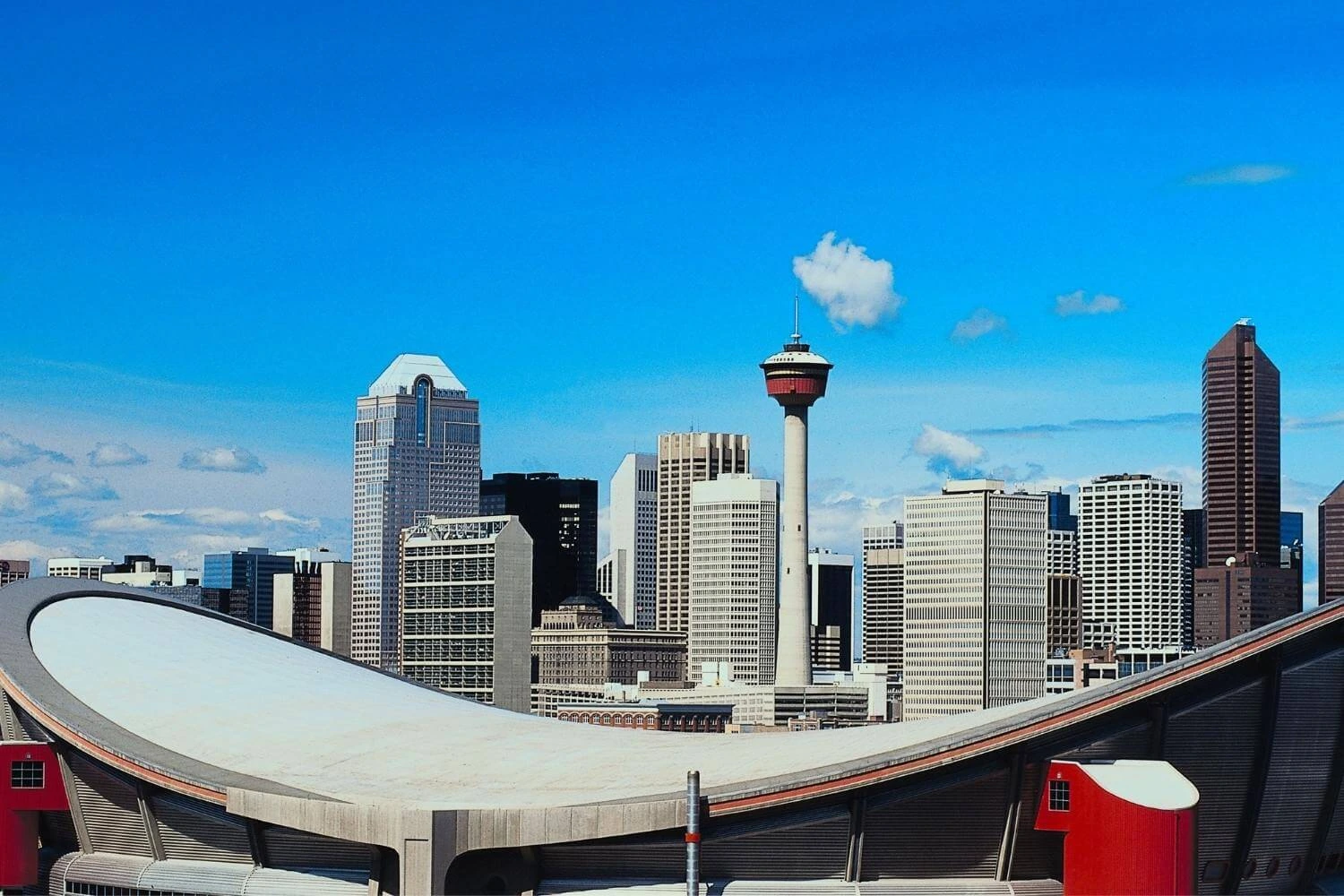
What Is Calgary Known For? History, Culture, And Solo Travel Insights
Think Calgary is all cowboys, oil rigs, and the Stampede? You’re not wrong, but that’s just the surface. This Canadian city often gets reduced to stereotypes, yet it offers so much more for travelers, especially if you’re exploring solo. Calgary is where western grit meets urban ease, where you can walk from a glass skyscraper to a riverside trail in minutes, and where world-class nature is less than an hour away.
As someone who’s traveled solo in Calgary multiple times now, I’ve discovered the layers that make this city genuinely unique. Beyond the cowboy hats and rodeos, Calgary pulses with culture, history, and adventure, all in an easy, approachable package. In this post, I’ll show you what Calgary is really known for (and yes, it goes way beyond the Stampede).
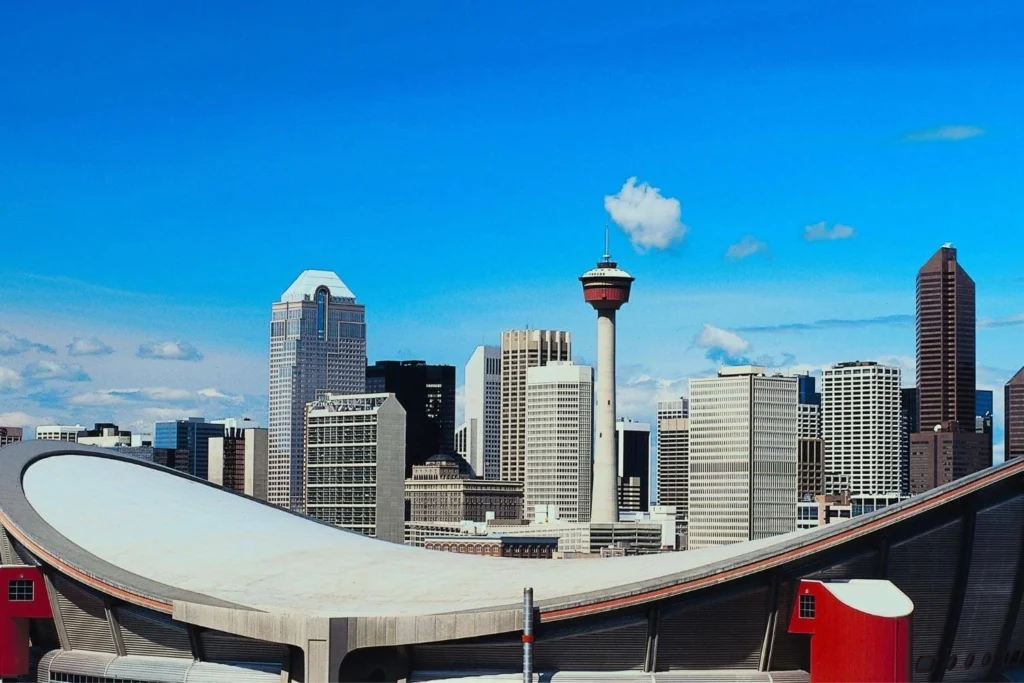
History Of Calgary
Long before Calgary became a modern city, the land was the Indigenous peoples home, including the Blackfoot Confederacy. Its location at the meeting point of the Bow and Elbow Rivers made it a natural gathering and trading place. After the European settlement, as expansion moved westward, that geography influenced the transportation routes, settlement patterns, and neighbourhood layouts.
Calgary was founded in 1875 and officially named Fort Calgary in 1876, established by the North-West Mounted Police (NWMP). It became an incorporated town in 1884 and grew rapidly from just a few hundred settlers to several thousand within a short period of time.
Originally, Calgary functioned largely as a farming and agricultural settlement. That changed dramatically with the arrival of the railway. As transportation links expanded, Calgary evolved quickly from a small frontier outpost into a regional centre of trade, administration, and industry. What stands out most in Calgary’s early history is the speed of that transformation.
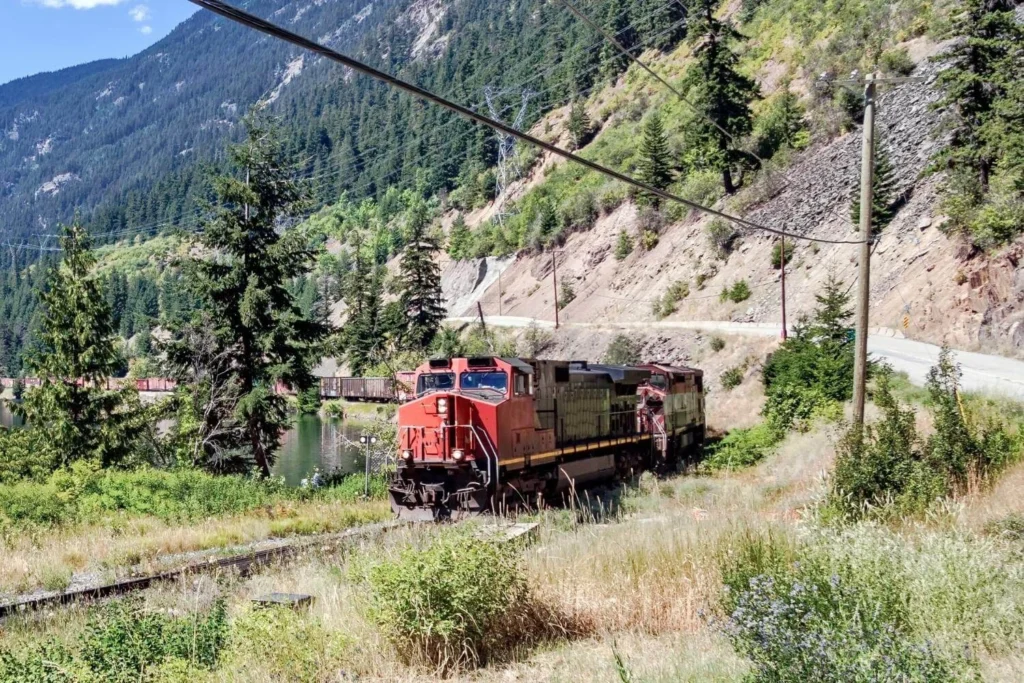
The Canadian Pacific Railway Headquarters
The arrival of the Canadian Pacific Railway was a turning point in Calgary’s development. It connected the city to the rest of the country and positioned it as a key gateway to Western Canada.
The railway did more than transport people and goods. It brought investment, industry, and long-term economic stability. In 1891, the Canadian Pacific Railway established a direct connection between Calgary and Edmonton, which triggered a significant population boom. Thousands of farmers and settlers moved into the surrounding region, accelerating Calgary’s expansion and cementing its role as a regional centre.
As Calgary’s ties to agriculture and cattle ranching deepened, the city became widely known as a “cow town,” a reputation that still shapes its identity today. The influence of the railway is still visible in Calgary’s layout, its downtown core, and its continued importance as a transportation and logistics hub. Today, the company that owns the Canadian Pacific Railway operates under the CP brand with its headquarters in Calgary.
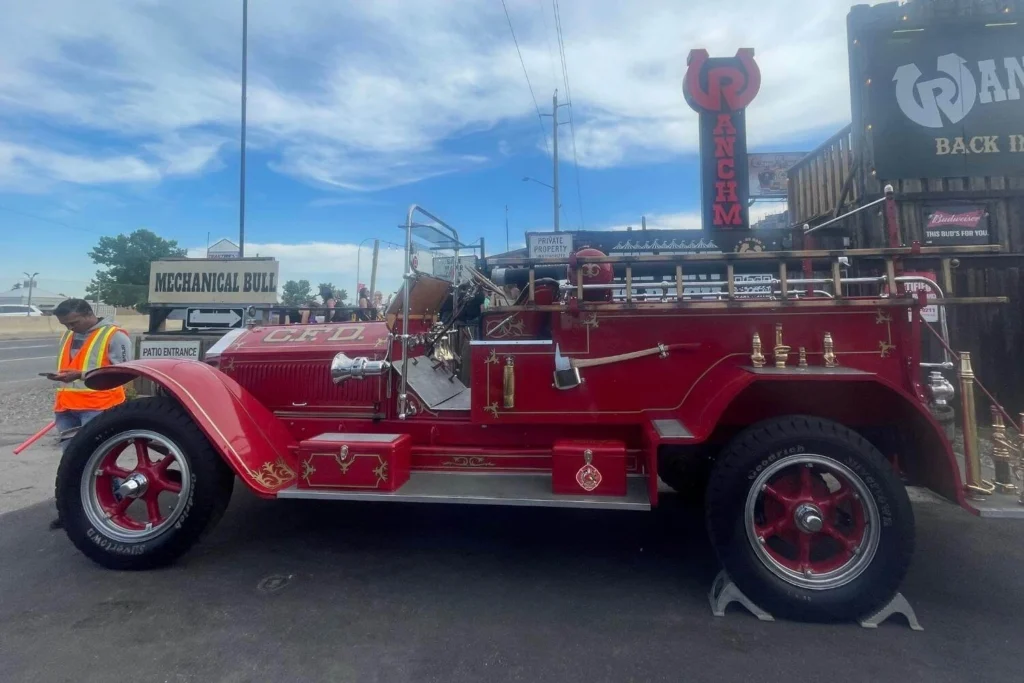
The Calgary Fire Of 1886
In 1886, a devastating fire swept through Calgary, destroying much of the early settlement. It was catastrophic at the time, but the fire permanently shaped the city’s character and architectural identity.
Earlier that year, political infighting within the town council had created significant dysfunction in local government. A firetruck had been delivered to the town, but due to disputes over payment, it sat unused for months. On November 7, 1886, the Great Fire broke out, and the town was forced to rely on that long-neglected firetruck in a state of emergency.
Fortunately, the equipment played a crucial role in stopping the spread of the fire. Only eighteen buildings were damaged, a far smaller loss than could have occurred without intervention. In the aftermath, strict building regulations were introduced requiring the use of sandstone. This decision gave Calgary its nickname, Sandstone City, and many of those historic sandstone buildings still stand downtown today.
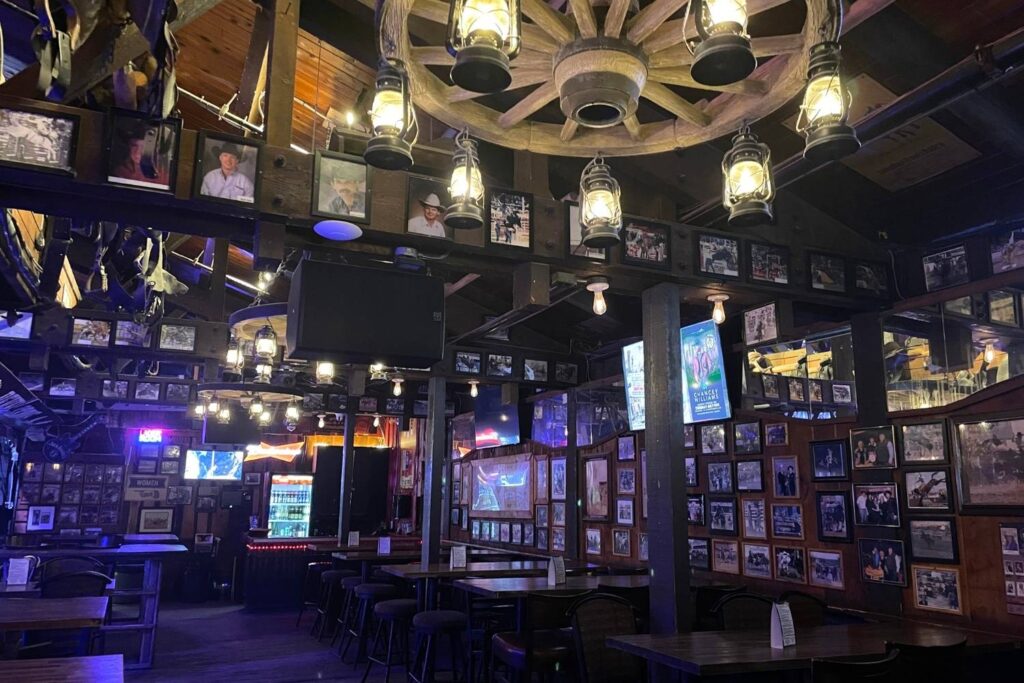
Calgary’s Western And Cowboy Culture
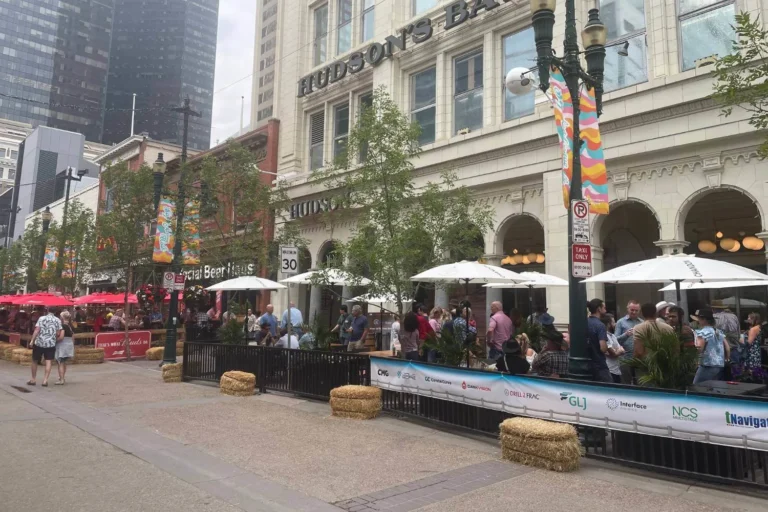
Western culture in Calgary isn’t something that appears once a year and disappears again. It’s woven into the everyday life. Ranching, rodeo, and agricultural traditions still influence fashion, social events, and even workplaces so you’ll see Western culture in local bars, dance halls with line dancing nights, live country music, restaurants serving farm to table food, Western retail stores and festivals throughout the year.
This Western identity also shapes Calgary’s friendliness. People tend to be open, chatty, and unpretentious, which makes solo travel feel less intimidating than in some larger cities.

The Calgary Stampede
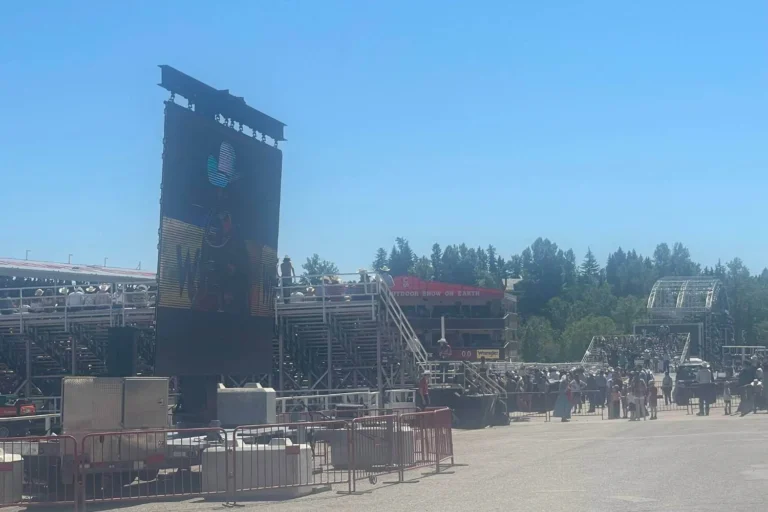
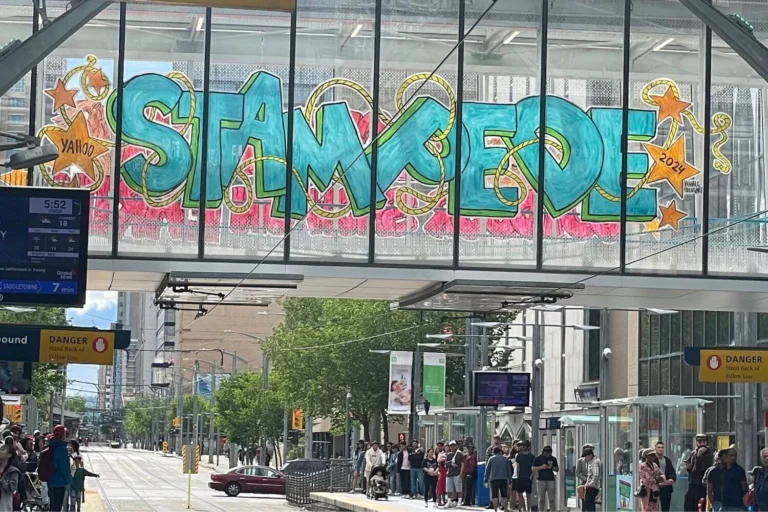
The Calgary Stampede is the city’s most famous export, and for good reason. Known as The Greatest Outdoor Show on Earth, it’s one of the largest and most iconic rodeo and festival events in the world.
For ten days each July, the entire city transforms. There are daily rodeos, concerts, pancake breakfasts, parades, pop-up patios, and neighbourhood events. You can choose a jam-packed schedule, quieter daytime experiences, just focus on live music or cultural events, or simply enjoy the citywide energy without committing to everything.
For solo travellers, the Stampede is a great way to build confidence. I’ve attended the Stampede several times on my own as it’s very solo travel friendly. If you’re planning a trip to the Stampede or considering it, check out my Calgary Stampede guides.
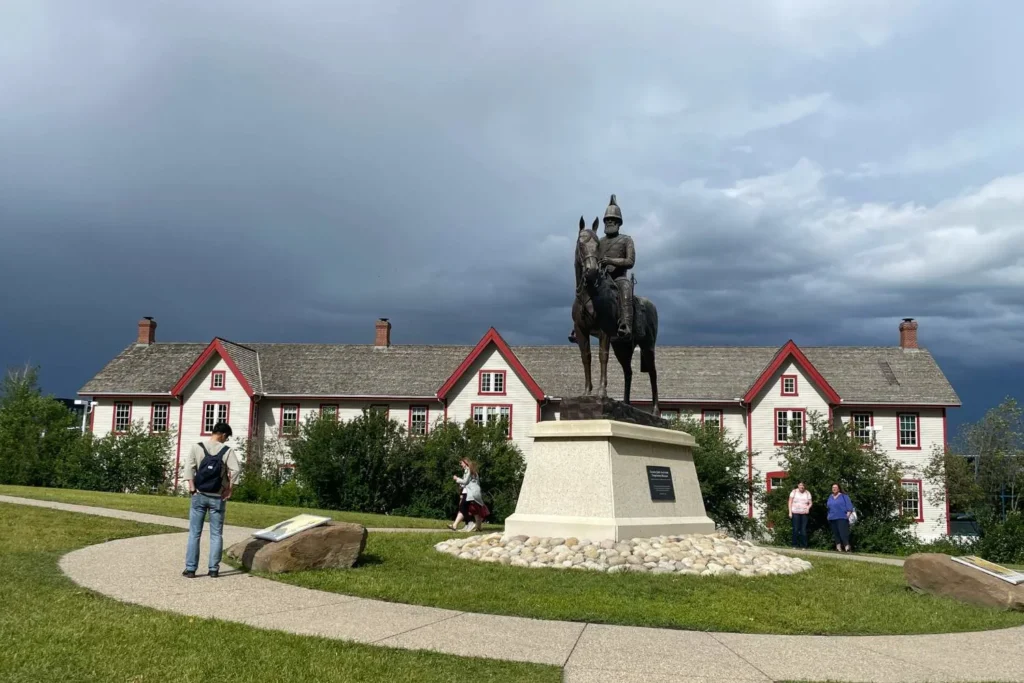
Fort Calgary
Fort Calgary marks the original site where the city of Calgary began. It is the location of the original wooden fort that established Canada’s formal presence in the area and laid the foundations for the city that exists today.
Long before the fort was built, this land at the confluence of the Bow and Elbow Rivers was occupied by Indigenous peoples. The site was a natural gathering place and held deep cultural and practical significance well before European settlement.
Constructed by the Northwest Mounted Police (NWMP) in 1875, the fort’s purpose was to establish order in the region, make treaties with Indigenous peoples, and monitor the illegal whisky trade that had become widespread at the time. The presence of the NWMP marked a turning point in the region’s history and directly shaped Calgary’s early development as a settlement.
Today, Fort Calgary offers a deeper and more nuanced look at the city’s founding and the complex relationships between colonial authorities and Indigenous communities. It provides essential historical context that goes far beyond the cowboy imagery many people associate with Calgary.
Located near the river pathways and close to downtown, Fort Calgary is an easy stop if you’re already exploring the city on foot. The site is preserved and operated by the Fort Calgary Preservation Society, ensuring that this important chapter of the city’s history continues to be shared, examined, and preserved. In spring 2024, Fort Calgary changed its name to The Confluence Historic Site & Parkland.
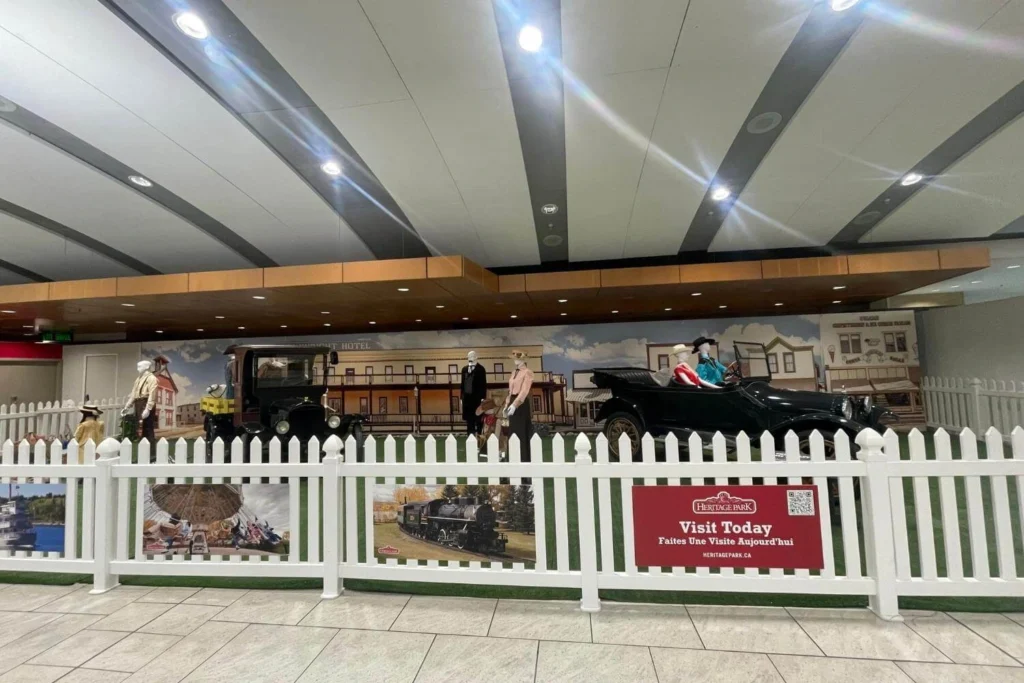
Heritage Park
Heritage Park, which opened on July 1, 1964, has grown into one of North America’s largest living history museums. It’s one of those places that makes Calgary’s past feel real, not just something you read on a plaque and forget ten seconds later.
Heritage Park’s mission is straightforward but meaningful. It aims to preserve the history of the land and provide hands-on education for people of all ages. Part of what makes it so impressive is the scale of the operation behind the scenes. The park has approximately 500 employees and over 1,800 volunteers, which gives you a sense of how much community effort goes into keeping it running.
The park is spread across 127 acres (51.40 hectares) and includes over 200 exhibits and attractions. You can explore through self-guided walking tours if you like moving at your own pace, or take the train around the park if you want a more relaxed way to see a lot without wearing yourself out.
One of the most memorable highlights is the replica of the S.S. Moyie, a sternwheeler originally built in 1898. The replica operates on the lake during the summer months.
Solo Traveler Tip: Heritage Park is one of the easiest attractions in Calgary to do alone. You’re not relying on anyone else’s attention span, you can linger at the exhibits that interest you most, and it’s completely normal to spend half your visit wandering, taking photos, and stopping for snacks whenever you feel like it.
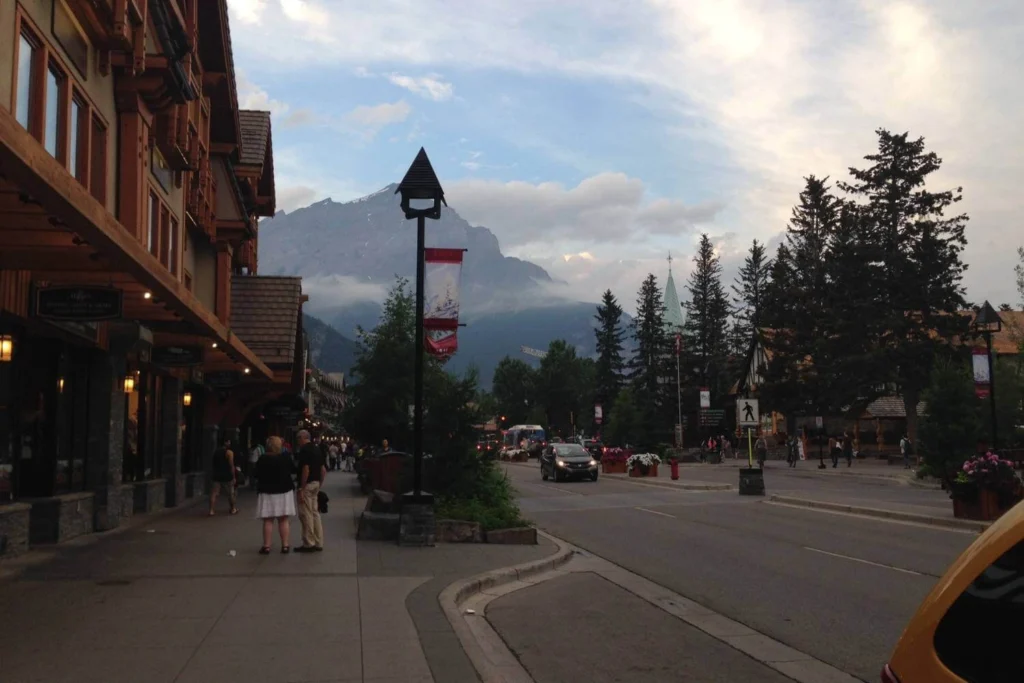
Gateway To The Rockies
One of the biggest reasons people come to Calgary is its proximity to the Canadian Rockies. Calgary is often called the gateway to the rockies, because it’s less than an hour from world-famous destinations like Banff and Canmore.
Many travellers use Calgary purely as a jumping-off point, but staying in the city makes a lot of sense, especially for solo travellers. Accommodation is often more affordable, transit is straightforward, and you’re not locked into constant movement. Calgary is great as a base because you can mix day trips into the mountains with city days.
Calgary Flames (National Hockey League)
Hockey is deeply ingrained in Calgary culture. The Flames are more than just a team. Game nights are community events, and even non-sports fans can quickly absorb the energy.
Founded in 1980, the Calgary Flames had their first game on October 9th of the same year. The team had resounding success the decade following their debut and continues to have the city’s support.
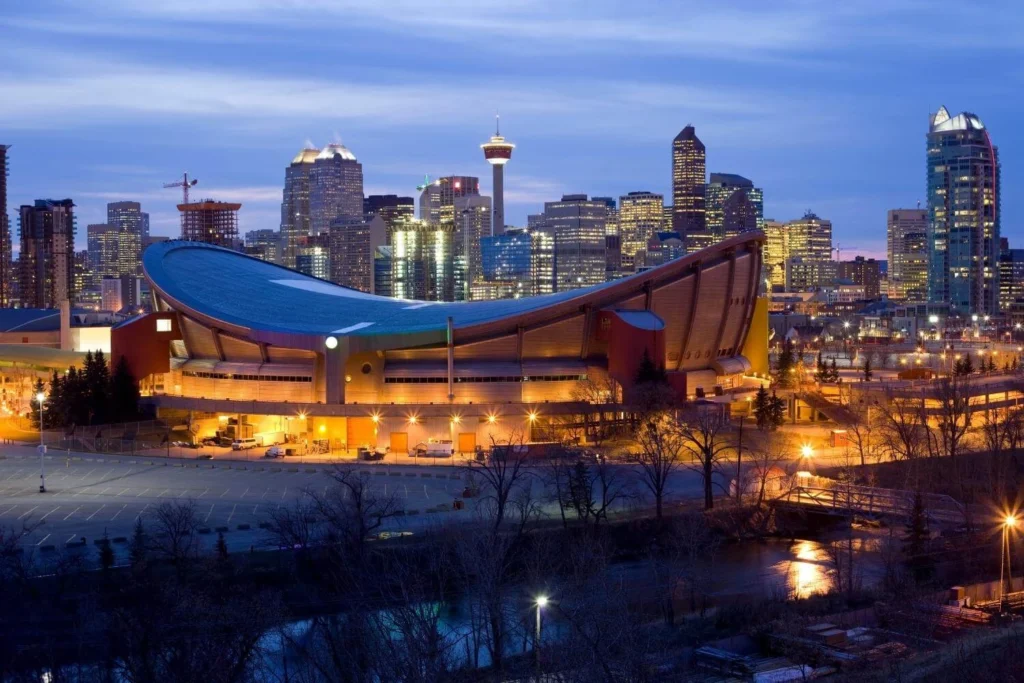
Today they play in the Scotiabank Saddledome. Attending a game alone is easy, social, and surprisingly fun, especially if you enjoy observing local culture.
Calgary Stampeders (Canadian Football League)
The Calgary Stampeders are a central part of the city’s sports culture and represent Canadian football in a way that feels distinct from the NFL. Founded in 1945 when they played their first game, the Stampeders have built a long and successful legacy in the Canadian Football League. Thirty-eight players have been inducted into the Canadian Football Hall of Fame, and the team has appeared in the Grey Cup fifteen times.
The Stampeders have played at McMahon Stadium since 1960. While the stadium has been modernised over the years, it still feels very much like a local, community-driven venue, which is part of its charm. Games are lively, community-focused, and accessible for visitors who aren’t die-hard football fans.
Beyond the sport itself, the Stampeders reinforce Calgary’s Western identity in a modern context, blending tradition, loyalty, and a strong sense of local pride.
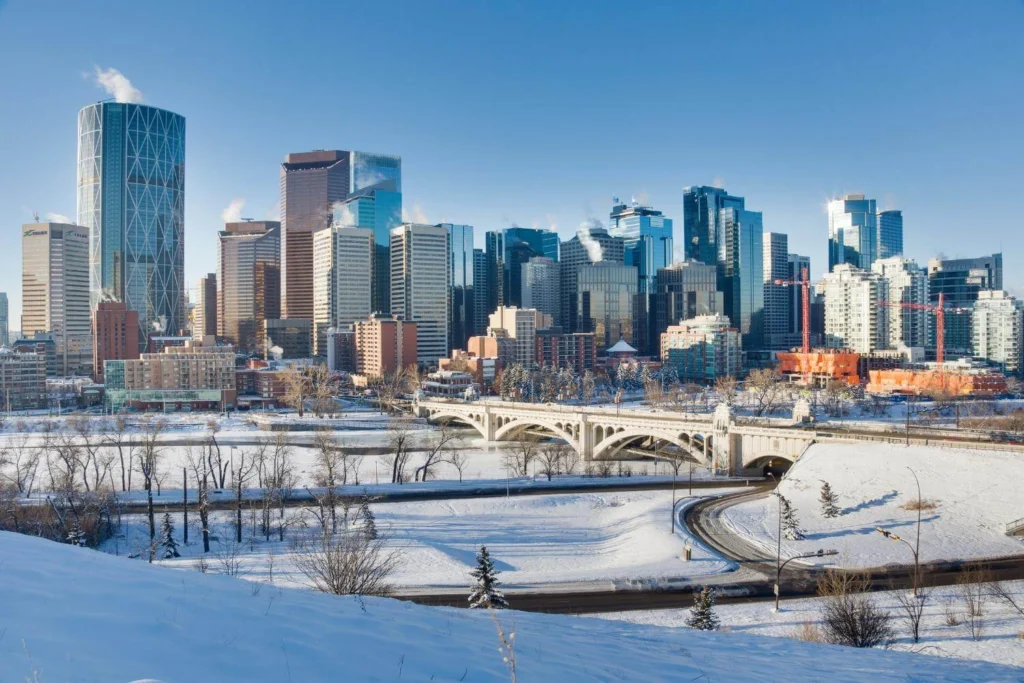
Calgary 1988 Olympic Winter Games
Hosting the 1988 Winter Olympics put Calgary on the global map. Held from February 13th-28th 1988, it was the first Winter Olympics hosted in Canada, and the 15th annual Winter Olympics. Canada didn’t dominate the medal table, but hosting the Games marked a major milestone for Canadian athletes.
One of the most famous cultural moments tied to these Games is the debut of the Jamaican bobsled team, whose story later inspired the film Cool Runnings.
Calgary was also one of the first cities to have “medal parties,” which is where medals were awarded at night with music and dancing.
The legacy of those Games is still visible today, particularly in sports infrastructure and civic pride.
Canada’s Sports Hall Of Fame
Calgary is home to Canada’s Sports Hall of Fame which celebrates athletes and moments from across the country. It was established in 1955 and features approximately 700 people. As a charitable organization, the hall of fame focuses on educating people on Canadian sports and their benefits.
It features 65 different sports and 12 galleries that feature sports memorabilia on display as well as interactive exhibits. The Hall of Fame also has a traveling exhibition and some online exhibits.
Even if you’re not a sports enthusiast, it offers insight into how sport has shaped Canadian identity.
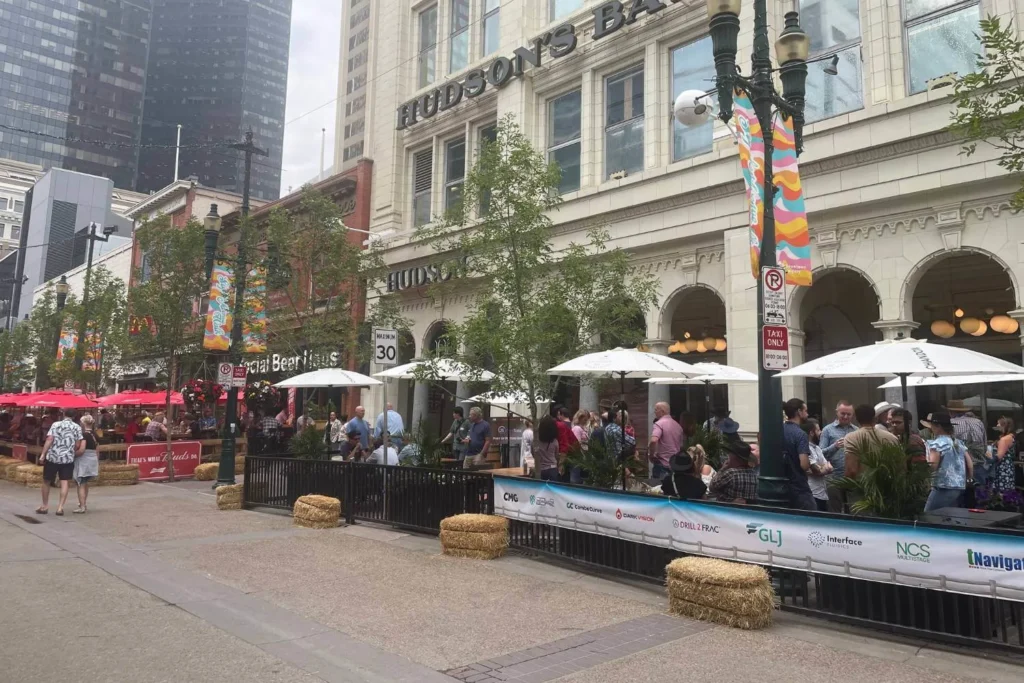
Calgary’s Food And Drink Scene
Calgary often flies under the radar as a food city, but it shouldn’t. Thanks to Alberta’s strong agricultural roots, the city is especially known for high-quality, locally sourced beef, which anchors many menus across casual eateries and higher-end restaurants alike.
In recent years, Calgary’s food scene has become noticeably more diverse and creative. Immigration and a growing local chef culture have expanded the range of cuisines available, from global comfort food to modern Canadian cooking with regional influences.
The city also has a well-established brewery culture and a great coffee scene. Independent coffee shops, neighbourhood breweries, and low-key bars are everywhere, particularly in central areas like Stephen’s Ave. For solo travelers, there is bar seating, counter service, and relaxed atmospheres, which makes dining alone feel normal and comfortable rather than awkward or rushed.
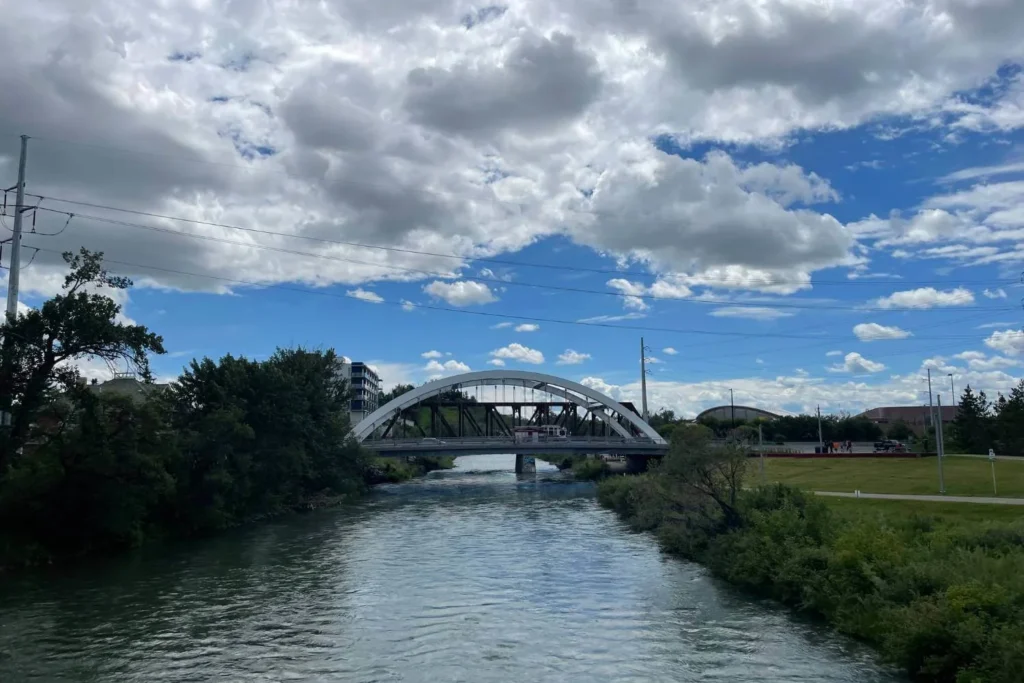
Walkable Downtown And River Pathways
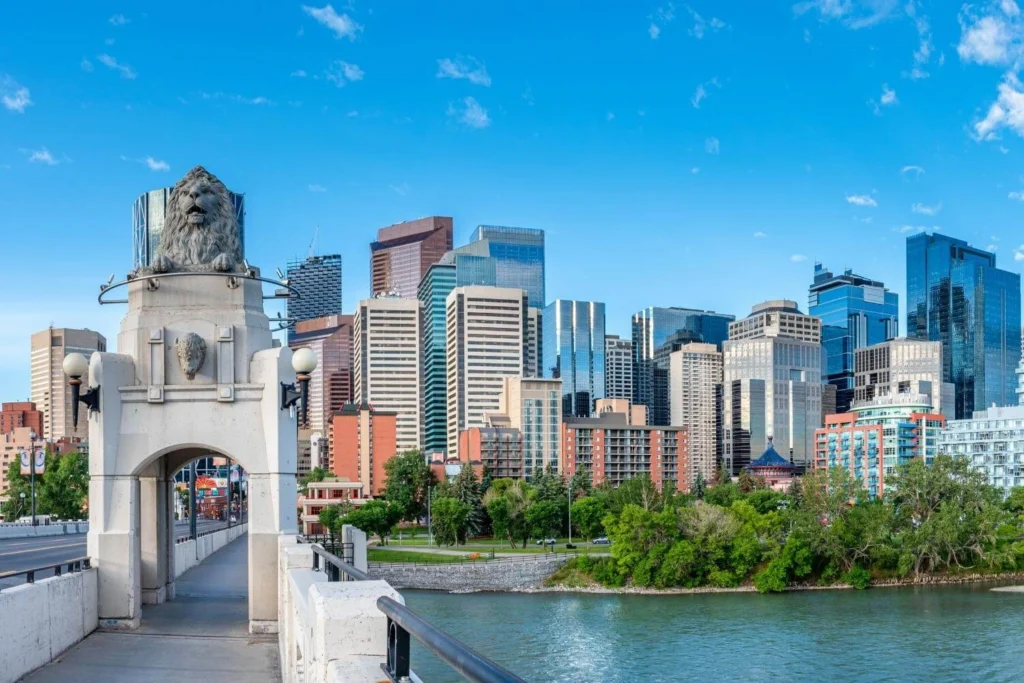
Calgary is a really walkable city. The downtown core is compact, easy to navigate, and well connected by pedestrian-friendly streets and pathways.
The city’s river pathway system, particularly along the Bow River, runs directly through downtown and links parks, bridges, neighbourhoods, and scenic viewpoints. These pathways make it easy to explore the city on foot, whether you’re heading somewhere specific or simply wandering.
I’ve explored Calgary many times on foot, and it’s the best way to see the city. You can wander around at your own pace, stop when something catches your attention, and move through the city without constantly relying on transit or rideshares. In the downtown core, it’s easy to catch the C-Train for breaks from walking.
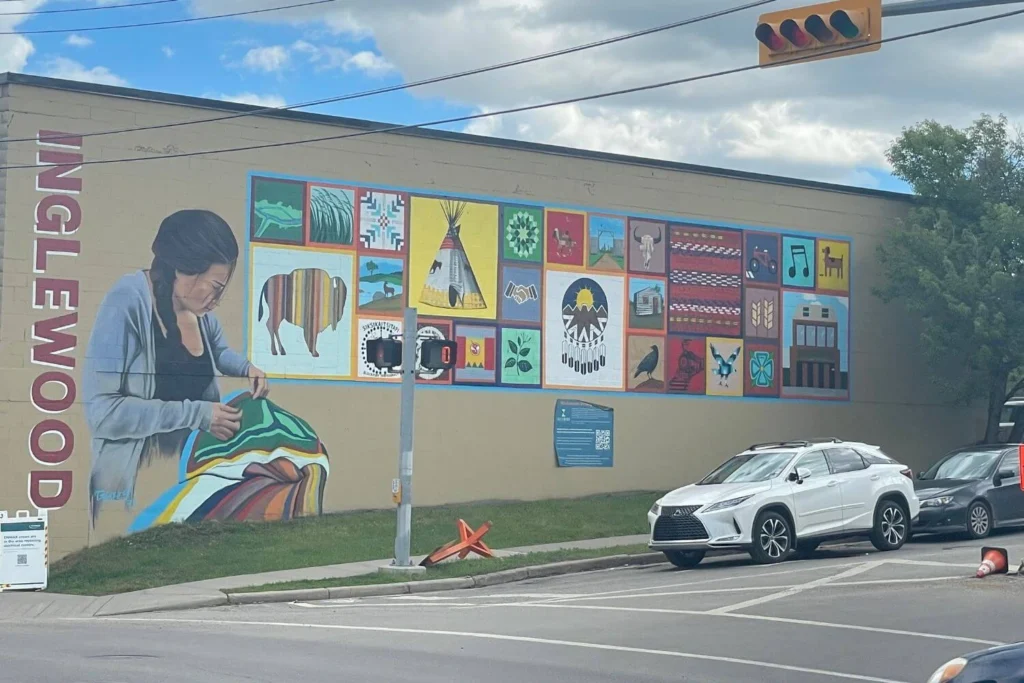
Arts, Culture, And Local Identity
Calgary’s cultural identity goes far beyond its Western reputation. The city has a strong public art presence, with murals, installations, and sculptures woven into the cities public spaces rather than confined to galleries alone.
Museums like Studio Bell (home of the National Music Centre) and the Military museum, live music venues, festivals throughout the year, and community events play a big role in local life, particularly during the warmer months. Cultural experiences here tend to feel accessible rather than exclusive so visitors can participate without feeling out of place.
What stands out most is Calgary’s sense of community. There’s a strong local pride that shows up in neighbourhood events, small venues, and grassroots creative spaces, giving the city a welcoming, lived-in feel rather than a purely tourist-driven one.
Is Calgary Worth Visiting As A Solo Traveler?
Yes, Calgary is a great choice for solo travelers. The city is safe, easy to navigate, and friendly without being overwhelming. It offers enough structure to feel supported while still allowing plenty of freedom to explore independently.
Whether you’re visiting for a few days or using Calgary as a longer base, it’s a city that rewards curiosity and self-paced travel. You don’t need a packed itinerary or constant movement to enjoy it, so it’s an ideal city for first-time solo travelers or anyone looking for a balanced, low-stress city experience.
Calgary Is Known For Far More Than Its Stereotypes
Beneath the cowboy imagery and Stampede headlines is a city shaped by history, community, and a close relationship with nature. It’s a place where Indigenous roots, railway expansion, Western culture, and modern city life intersect naturally.
What makes Calgary especially compelling is how approachable it is. The city is easy to navigate, walkable in key areas, rich in everyday culture, and close to some of the most dramatic landscapes in Canada. Whether you’re interested in history, food, sport, the arts, or simply exploring at your own pace, Calgary offers depth without demanding constant motion.
For solo travelers, Calgary allows you to engage as much or as little as you want, without feeling rushed, unsafe, or out of place. It’s a city that quietly supports independence, curiosity, and slower travel. If you’re planning a visit, Calgary isn’t just a stop on the way to the Rockies. It’s a destination in its own right, and one that reveals more the longer you stay.
Share Me
If you found this post helpful, share it or pin it! It’s one of the best ways to show your support. Thank you!